

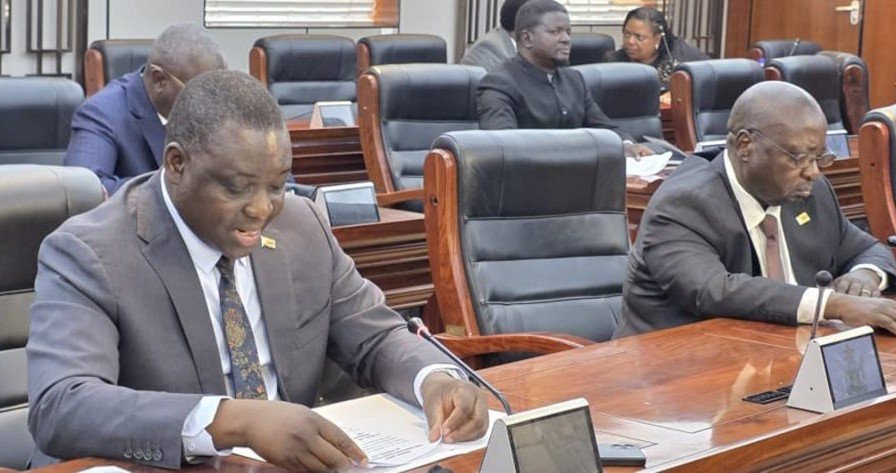
Cabinet has approved a Veterans Microfinance Bank. It also received an update on the 2026/2027 Summer Plan and drought measures. In addition, Cabinet approved the principles of the General Laws Amendment Bill, 2026. The Thirty-Eighth Post-Cabinet Press Briefing announced these decisions, among others.
Veterans Microfinance Bank to Open Access to Affordable Credit
Cabinet approved the new bank on the presentation of Honourable Kudakwashe Regimon Tagwirei. He is the Minister of Economic Development and Investment Promotion and Acting Chairman of the Cabinet Committee on National Development Planning.
Why Government Wants the Bank
Government says it recognises the sacrifices of Veterans of the Liberation Struggle. Moreover, it remains committed to their welfare and socio-economic empowerment. Veterans have already gained from programmes in land allocation, mining, agricultural support and enterprise development. However, limited access to affordable finance still holds back their enterprises and the full use of their assets.
Therefore, the bank aims to close that financing gap. It will also strengthen credit discipline and promote Veteran-led entrepreneurship. In addition, it should support the sustainability of the Veterans of the Liberation Struggle Fund. As a result, veterans’ empowerment would shift from a mainly welfare-based approach to a self-sustaining, investment-driven model.
How the Bank Will Work
First, the bank will operate as a licensed microfinance bank under the Reserve Bank of Zimbabwe (RBZ). Then, over three to four years, it will move in phases towards a fully-fledged, deposit-taking and digitally-enabled institution. The process covers licensing, governance set-up, pilot operations, digital expansion and national rollout.
Government will finance the bank. It will run as a wholly-owned subsidiary of the Veterans Investments Holding Company (VIHC) and serve as a special-purpose financial inclusion vehicle. Meanwhile, the People’s Own Savings Bank (POSB) will give technical and institutional support through a mothering arrangement. The bank will also use Veterans-owned commercial assets to support its operations and lending capacity.
Furthermore, it will build on existing assets such as land, mining claims and entrepreneurial ventures. Specially designed financing arrangements will unlock their economic potential.
Products and Beneficiaries
The bank will offer agribusiness loans, order financing, personal loans, group lending and emergency loans. It will also run financial literacy initiatives and provide digital financial services. War Veterans, including women and youth, will be the primary beneficiaries. However, the bank may extend services to members of the general public where appropriate.
Cabinet noted that the proposal fits Section 23 of the Constitution of Zimbabwe. Moreover, it draws on examples from the Philippine Veterans Bank, Zigama Credit and Savings Bank of Rwanda, and the Wazalendo Savings and Credit Cooperative Society of Uganda.
Drought Mitigation: Grain Reserves, Pfumvudza and US$400 Million
Honourable Dr. Anxious Jongwe Masuka, Minister of Agriculture, Mechanisation and Water Resources Development, presented the update on the 2026/2027 Summer Plan. The plan incorporates the Drought Mitigation Plan. It responds to a predicted strong El Niño drought and prevailing global tensions. Cabinet received and noted the update.
The plan has six pillars: Enhanced Strategic Grain Reserve; Accelerated Climate-Smart Production; Integrated Financing Architecture; Livestock Drought Mitigation; Enhanced Imports; and Coordination, Early Warning Systems and Capacity-Building.
Grain Reserves
The Grain Marketing Board’s Strategic Grain Reserve currently holds 374 218 metric tonnes of grain.
Pfumvudza/Intwasa Production
Pfumvudza/Intwasa plots now number 17 937 952 and cover 1 171 122 hectares. That is 12% above target. Now the focus is on following all the programme’s principles to achieve the desired yield impact. In addition, officials strictly enforce agro-ecological tailoring when they distribute inputs under the Presidential Inputs Scheme.
Irrigation and Water
The country’s total irrigated area now stands at 308 969 hectares. Farmers planted about 130 316 hectares to wheat, which yielded a record 681 624 metric tonnes. That harvest beats last year’s record crop by 6.4%. Furthermore, officials have identified 119 068 hectares for irrigated maize. Meanwhile, the national average dam storage level stands at 81% of capacity, well above the 59% expected at this time of year.
Drought Centres, Financing and Livestock
Government has set up 1 118 Ward Drought Mitigation Centres out of a target of 1 527 wards. In addition, Treasury has set aside US$400 million for the El Niño drought response.
Livestock face risk too. Drought threatens 2 299 284 cattle, about 40% of the national herd. Therefore, Government has put water, feed and fodder strategies in place. Overall, Cabinet said coordination, early warning systems and capacity-building are progressing satisfactorily.
General Laws Amendment Bill to Align Statutes with Constitution Amendment (No. 3) Act
Honourable Ziyambi Ziyambi, Minister of Justice, Legal and Parliamentary Affairs, presented the principles of the General Laws Amendment Bill, 2026. Cabinet approved them.
What the Bill Changes
The Bill will amend all Acts of Parliament that the Constitution of Zimbabwe Amendment (No. 3) Act of 2026 affects. As a result, those laws will conform to the Constitution. They cover:
- the registration of voters;
- the structure and leadership of the superior courts;
- the jurisdiction of the Constitutional Court;
- qualifications for appointment to the Office of Attorney-General;
- the appointment of the Prosecutor-General;
- the functions of the Defence Forces and of the Zimbabwe Human Rights Commission; and
- the tenure of office of members of the Council of Chiefs.
Repeal of the Peace and Reconciliation Commission Act
In addition, the Bill will repeal the National Peace and Reconciliation Commission Act [Chapter 10:32]. The Constitution gave the commission a 10-year life, and that period ended on 22 August 2023.
Why Government Wants Prompt Alignment
Government says prompt alignment will give legal certainty to the institutions concerned. It will also uphold the supremacy of the Constitution. Furthermore, it will remove legislation that no longer serves a purpose from the Statute Book.