
Joshua Nkomo cooperative audit ends in stalled AGM, fight over the register and calls for a clean-out
The audit of the Joshua Nkomo Housing Cooperative was meant to open a new chapter for thousands of Kambuzuma families. Instead, it has sparked a fight over who may vote. Residents now ask why a committee accused of serious abuses wants to return to office.
On 14 November 2026, residents gathered at Joshua Nkomo Primary School to hear the findings. The Ministry of Women Affairs, Community, Small and Medium Enterprises Development ordered the audit. What residents heard was damaging.
What the auditors found
Money. Auditors found that the cooperative spent US$84,000 of members’ money on court battles against the same members who paid it in. The report said members’ funds should pay for development, not for suing members.
Auditors also reportedly found that the cooperative used up US$760 in ZIMSEC fees paid at the primary school. As a result, Grade 7 pupils could not sit their examinations. The cooperative also reportedly spent money on fuel for a vehicle that nobody has ever seen. Building inspection fees that members paid never reached the council, and auditors could not trace the money.
Land. Auditors identified 276 stands missing from the approved plan. Another 46 stands sit in buffer zones for ZESA and other service providers. Someone cut a whole primary school site into 57 residential stands. Someone also divided five hectares of a secondary school site into stands and put some stands where the plan placed shops. The report said all commercial and institutional stands belong to government, so nobody should have sold them.
The register. The register lacks enough information on 1,060 stands. A total of 343 stand holders skipped verification, and auditors told them to report to the auditor. Forty stands carry the names of children under 18.
An AGM that never happened
That same day, members were due to elect a new management committee at the cooperative’s Annual General Meeting. Unresolved problems with the register stopped the election. Residents say they had no chance to question the audit.
The AGM moved to 21 November 2026. A second notice then postponed it with no new date. F. Musimeki, the Acting Registrar of Cooperative Societies, signed that notice.
Before the postponement, the Ministry summoned the current management and the group campaigning to replace them. Both sides came back saying the register is the sticking point. Management says only fully paid-up members should vote. The challengers counter that government itself once stopped cooperatives from collecting payments over irregularities. They argue that members should not suffer for failing to pay when the rules barred them from paying. Some people who attended verification reportedly do not appear on the auditor’s list, so that list is also disputed.
Questions over the committee
Residents also question who sits on the committee. Members say the membership elected only three of the current members. They say someone placed the rest without a vote. Most members hold more than one stand, residents say, and some hold close to ten. This newspaper has not independently checked these claims.
Length of service is another complaint. Under the Co-operative Societies Act [Chapter 24:05], committee members of a registered society serve three years, counted from one AGM to the next. They may then stand again. The Act also requires at least one-third of the committee to step down at each AGM. A society must hold an AGM within six months of the end of each financial year. If it misses that deadline, the committee must tell the Registrar and explain why. Residents say the current leaders have served more than ten years, over three times the legal term.
Politics and suspicion
For many members, the most painful part is political. They say the cooperative’s alleged conduct contradicts the stated position of ZANU-PF and President Mnangagwa against corruption. Some suspect the committee has powerful backing. They point to a ZANU-PF Member of Parliament who holds a stand in the cooperative. Residents allege that people plan the committee’s return at his home. They say an MP should raise such matters in Parliament instead. This newspaper has not asked the MP for comment and has not confirmed his name. These allegations remain unproven.
Members say the committee’s decision to campaign for re-election after such an audit deepens their suspicion. They argue that authorities should investigate the people the audit names rather than let them campaign. If the evidence supports it, they want prosecution. They reason that only someone with influence could let such a campaign go ahead.
The usual course, and what the law allows
In cases like this, authorities normally put elections on hold while they investigate the findings. The current committee steps aside so it cannot interfere. An interim management takes over and builds a clean, agreed register. Only then do elections take place, so every genuine member votes on a fair list. On this view, now is the wrong time for an election.
The Act allows this. It lets an administrator take over a society’s work, call special meetings to report to members and help them elect a new committee under the society’s rules. A past High Court case involving another housing cooperative described such an arrangement. An interim committee insisted that auditors examine the outgoing leaders before any election. The Ministry has not said whether it will take this route.
A troubled history
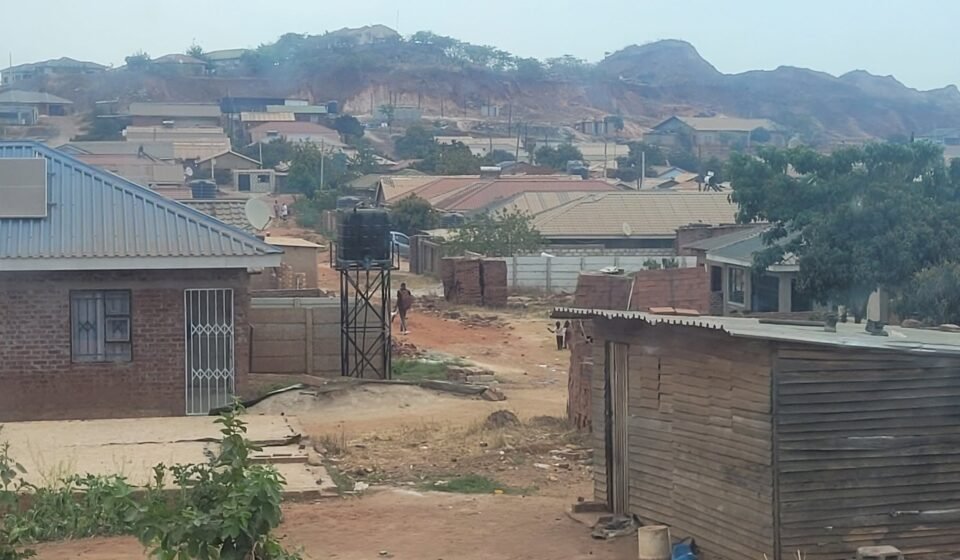
In October, Deputy Minister Kiven Mutimbanyoka toured the Kambuzuma site. He urged the leadership to strengthen financial management, use formal banking channels and hold regular monthly meetings. The cooperative has completed 508 housing units, yet reports say parts of the settlement still lack adequate water, sewer lines and electricity.
Land ownership has been contested for years. Government allocated the cooperative and affiliated groups land at Stand 48, Aspindale Park, in 2004. In June 2005, during Operation Murambatsvina, authorities demolished houses built under cooperative schemes in Kambuzuma. In 2019, government cancelled the offer letters of five housing cooperatives on private land between Kambuzuma and Marimba, including Joshua Nkomo. That cleared the way for the landowner, Marimba Residential Properties, to take the land.
These are audit findings and residents’ allegations. Courts have not ruled on them, and police have charged no one. This newspaper has not yet obtained comment from the cooperative’s management, the challenging group, the MP or the Ministry. The Registrar has not announced a new date for the AGM.