

Zimbabwe’s opposition did not fragment after Tsvangirai, it reverted to its pre-1999 form and died
Commentary on Zimbabwean opposition politics has long suffered from a sentimental delusion. It says the post-2018 collapse was a tragedy of fragmentation: a series of splits, betrayals, and state-sponsored sabotage that derailed a sound project.
This diagnosis is comforting, but it is historically false.
What happened after February 14, 2018 was not the fracture of a modern political movement. It was something more structural. The opposition reverted to the form that Zanu PF has understood, managed, and neutralised since independence.
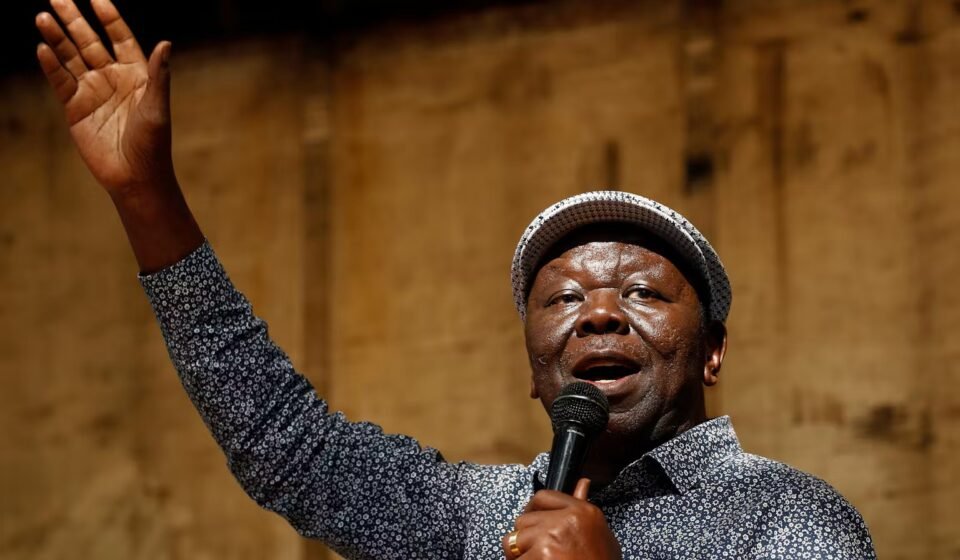
Morgan Tsvangirai was not merely the strongest opposition leader Zimbabwe has produced. He was the only figure who interrupted a long pattern of personality-centred, organisationally thin challenges. Those challenges never had the institutional muscle to alter the structure of the state.
When Tsvangirai died, the older pattern returned with ruthless speed and almost no resistance.
The pre-1999 baseline
To understand the collapse, we must look at where Tsvangirai started. Before 1999, resistance to Zanu PF came from episodic, leader-driven vehicles. They turned urban or regional discontent into moral protest, but never into lasting institutional power.
Abel Muzorewa’s United African National Council (UANC) was fatally compromised by the 1979 Internal Settlement. It also lacked an independent, mass-based organisation.
Edgar Tekere’s Zimbabwe Unity Movement (Zum) was an energetic personal split from Zanu PF in 1990. It briefly alarmed the ruling elite in Eastern Highlands constituencies. Yet it never built a national machine that could outlast its founder’s limited administrative reach.
Margaret Dongo, Ndabaningi Sithole in his later years, and various independents worked as isolated individuals or local factions. They could embarrass Zanu PF in particular parliamentary seats. They could not force the regime into power-sharing or contest state control.
How Tsvangirai broke the cycle
Tsvangirai’s intervention between 1999 and 2008 broke this cycle because of how it was built. He came from the shop floor as a former mineworker and secretary-general of the Zimbabwe Congress of Trade Unions (ZCTU). He fused the disciplined, branch-based habits of the labour movement with a broad civic and urban coalition.
The timing mattered. Economic collapse and hyperinflation had created a mass working-class and urban base. Earlier political figures never had access to such a base.
The Movement for Democratic Change (MDC) was far from flawless, but its organisation was exceptionally thick. It had elected provincial executives, institutionalised labour caucuses, and clear constitutional procedures. It also had deep roots in urban residential wards.
That thickness let the MDC withstand state violence. It absorbed painful splits, such as the 2005 break over Senate elections, and kept its operational core.
The 2008 test and the GNU
The strongest proof came in March 2008, when Tsvangirai defeated Robert Mugabe in the first round of the presidential election. The June rerun brought brutal state-sponsored violence. Even so, the MDC’s institutional weight forced Zanu PF into the 2009-2013 government of national unity (GNU).
For four years, opposition ministers in Harare managed state budgets and contested cabinet decisions. They showed that an alternative centre of power could function inside the state. That period remains the only sustained evidence, since independence, of an opposition imposing institutional costs on the ruling party.
The regression begins at Buhera
The decline began at Tsvangirai’s burial in Buhera in February 2018. The chaotic scenes at the homestead included physical threats against party leaders. Nelson Chamisa, Thokozani Khupe, and Elias Mudzuri immediately struggled for control. The movement had clearly abandoned its institutional anchor.
The succession contest was not treated as a constitutional procedure governed by party statutes. It became a fight over who owned a brand and who inherited charismatic authority.
The CCC and the organisational vacuum
When Chamisa formed the Citizens Coalition for Change (CCC) in January 2022, he did not update the MDC project. He dissolved its institutional premise. The stated aim was strategic ambiguity to counter state infiltration. In practice, the CCC deliberately avoided formal party structure.
It had no authoritative membership register and no functional party constitution. It had no transparent local branches and no clearly defined national executive council.
This design produced predictable weaknesses. The party was built on personal charisma and digital mobilisation, and it treated formal structure as a liability. That left it defenceless.
After the 2023 general election, Sengezo Tshabangu stepped into the vacuum. He claimed the title of interim secretary-general and began a wave of parliamentary recalls. The party had no legal footing and no internal machinery to resist. There was no constitution to cite and no verified membership roll to present in court. There was no institutional memory to draw on.
Pre-1999 dynamics return
Chamisa resigned from the CCC on January 25, 2024. Extended “Agenda 2026” consultations followed. Together they showed a complete return to pre-1999 dynamics.
High digital visibility and enthusiastic diaspora support cannot replace formal party machinery. The current opposition looks like Tekere’s Zum or Muzorewa’s UANC. It has high public discontent attached to one figure, but no organisational scaffolding to turn that discontent into state power.
Whatever disagreements marked her later career, Khupe’s sidelining removed one of the last senior figures from the original 1999 MDC trade union alliance. Her absence drained the opposition of leaders with experience in a structured, constitutional organisation.
Zanu PF fills the gap
Without a structured opposition, Zanu PF has reasserted total dominance over the state. Constitutional Amendment No. 3 passed through Parliament in 2026 with minimal opposition resistance. Elected representatives were still split over leadership legitimacy and strategy.
Meanwhile, former opposition figures keep joining Zanu PF structures across Harare and Bulawayo. This points to a broader demoralisation. Without an institutional home, politicians drift toward the state’s patron-client networks.
Conclusion
The cold reality of Zimbabwean politics in 2026 is that the opposition did not merely weaken or split after Tsvangirai. It reverted to an older, less effective model.
Zanu PF has spent more than four decades perfecting its response to episodic, personality-centred, organisationally thin challenges. It knows how to infiltrate, recall, co-opt, and outmanoeuvre projects built on charismatic individuals rather than institutional roots.
Tsvangirai’s historical significance lay in his alignment with an organised labour movement, not in his rhetoric. That alignment forced the regime to negotiate. After his death, the opposition gave up structural organisation for brand management and charisma.
What remains is public frustration and online commentary. It is not a government-in-waiting that can contest real power.