

£10k bribes bombshell hits Young Warriors
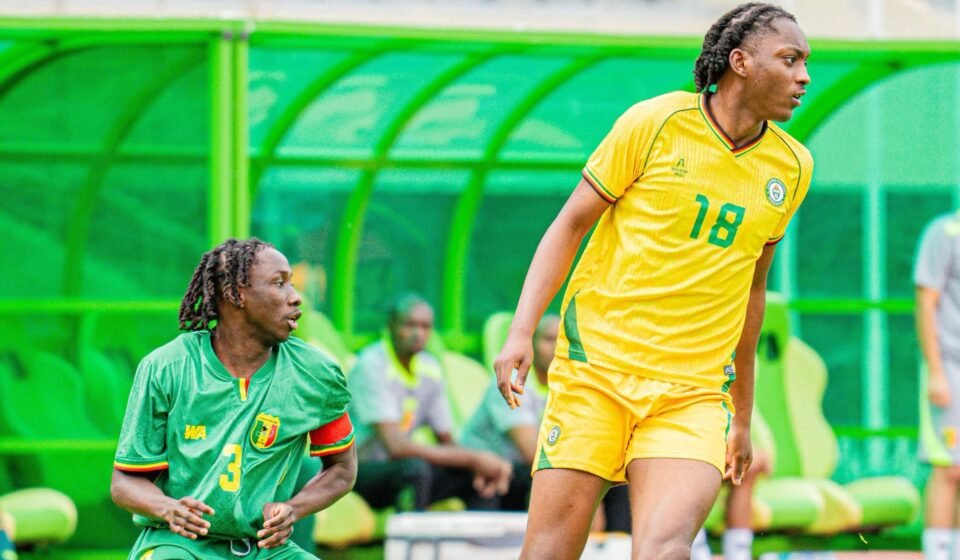
Inside the cavernous National Sports Stadium last Wednesday afternoon, the illusion shattered within 15 minutes. Ten of the 11 players in the golden yellow of the under-23 side grew up abroad. Selectors parachuted them in on the promise of diaspora pedigree.
By contrast, Mali’s players cut their teeth in France’s Ligue 1 and Ligue 2. Against them, the Young Warriors looked breathless, structurally lost and unprepared for international football.
The 3-0 defeat all but ended Zimbabwe’s hopes of reaching the 2028 Los Angeles Olympics. It also ignited a fierce national debate over who gets to wear the Warriors shirt. According to one former insider, the debate extends to how much the shirt costs.
Former assistant coach alleges cash-for-caps approaches
Bongani Mafu served as first assistant to head coach Baltemar José de Oliveira Brito until June 2024, during the Zifa normalisation committee’s tenure. He claims people approached him with five-figure sums to facilitate national team call-ups.
The former Highlanders coach stopped short of naming anyone. He suggested, however, that the practice had become entrenched within the national setup.
Mafu spoke on the DiasBhora podcast, hosted by former NewsDay sports journalist Sakheleni Nxumalo.
“Remember I was part of the national team and I can tell you what happens. When I was there, I have got parents from England who phoned me and offered me £10 000 to get their kids into the national team,” Mafu said.
“I’m talking about something that has happened to me, with real parents that I know. They offered me money to say, ‘Mafu, my kid, all he needs is a national team cap.’ Remember what a cap means in England. It means a lot in England.
“So, these kids and their agents – not all of them, some of them – buy their way in there so that they get a cap and they get a contract to play professional football.”
A balancing act between diaspora talent and local pathways
The allegation strikes at a growing tension in domestic football. Zifa must balance diaspora talent against the integrity of local pathways.
Zifa announced its “2030 Vision” this year. The self-anointed plan aims to reach the World Cup in four years. The strategy appears to rest almost entirely on scouting players born and raised abroad. It relies on foreign academies to do the heavy lifting of elite development.
However, in this under-23 camp, the pendulum swung too far. Only six of the 23 players picked for the Mali tie play in the Castle Lager Premier Soccer League. Almost the entire overseas contingent came from amateur and non-league tiers. Selectors chose them ahead of professionals who compete week in, week out in the domestic top flight.
Mali expose the gamble on the pitch
The folly showed quickly. Apart from isolated flashes from Birmingham City’s Menzi Mazwi, the overseas players looked off the pace. They gasped for air in the opening quarter-hour and struggled with basic passing. As a result, the hosts resembled wide-eyed amateurs alongside Mali’s streetwise professionals.
Zimbabwe only found a heartbeat when the technical bench turned to Ngezi Platinum Stars duo Nesbert Muzenda and Tanaka Munemo. Muzenda immediately injected width, grit and directness from right-back.
Local players left on the sidelines
Meanwhile, for local players watching from the sidelines, the selection felt like a slap in the face. Selectors overlooked Hunters left-back Junior Meya, who made the provisional squad before the technical team axed him. They also passed over:
- Highlanders trio Prince Ndlovu, Royn Nyamono and Shelton Moyo
- Caps United midfield mainstay Kunashe Chando and teammate Alleny Mukombedzi
- Calvin Chigonero
- Ngezi Platinum Stars midfielder Brooklyn Katumba
Murape calls for a merit-based selection system
That marginalisation prompted former Dynamos captain Murape Murape to criticise the technical team’s selection criteria publicly. He called for an urgent overhaul in how the team assesses talent.
“My position has never been local versus diaspora,” Murape said. “It is merit before geography, ability before connections, and national interest before personal interest.
“For some time, I have advocated for a structured approach to U23 player selection: establish a locally based selection and a diaspora-based selection, then bring both groups together for a joint assessment camp.
“This would allow the technical team to evaluate available talent under comparable conditions and select the strongest players on merit.
“My position is not about creating divisions between local and diaspora players. It is about building a credible system in which every deserving Zimbabwean has a fair opportunity and every selection decision can be justified on technical grounds.”
Mafu: teach diaspora players what the shirt means
In response, Mafu enthusiastically backed Murape’s plan. He argued that integration must rest on direct competition, not reputation. He also criticised the entitlement he sees in some overseas recruits.
“What Murape is simply saying is that the selection and mixing of these diaspora kids and locals should be based on a compare-and-contrast system,” Mafu said.
“Also the most important thing that should happen is the education of the kids that are coming out of Europe, about what Zimbabwe is.
“What kills me is seeing a kid who is on holiday because he thinks low about Zimbabwe.
“In his vocabulary, going to the Zimbabwe national team is just a pastime, it’s nothing serious. He will be thinking, ‘I’m superior, I’m better, I earn more.’
“We need a coach that can cancel all that. When you put on a Zimbabwe shirt, you are a Zimbabwe player.
“Whether you are a Manchester City player is immaterial. It will be material after you have produced goods on the field of play.
“So, I totally agree with Murape that there should be a coordinated effort to bring the right players for the right reasons.
“Let’s not just bring players because there is a super-agent who can pay his way into a boy coming on board.”
A near-impossible task in Bamako
An easy win over a semi-amateur Mauritius side in the earlier rounds lulled the selectors into a false sense of security. Mali delivered a harsh reality check.
Consequently, Zimbabwe now travel to Bamako for Tuesday’s return leg. They face a task akin to threading a camel through the eye of a needle if they want to overturn a three-goal deficit and save their Olympic dream.