

Sacred Chinhoyi caves sacrificed to tourism
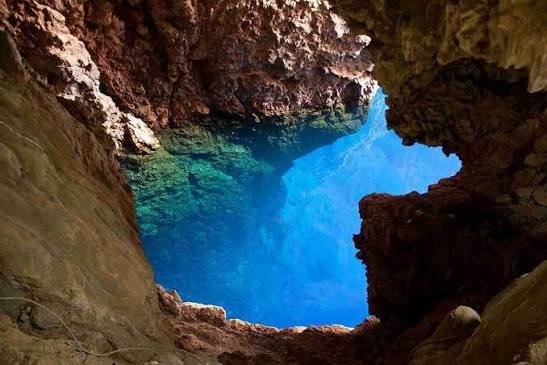
For generations, the cobalt-blue waters of Chirorodziva were not a backdrop for social media photographs. Today, people know the site as the Chinhoyi Caves. Once, it was a sanctuary of silence, reverence and spiritual authority.
Within the cool shadows of the sinkhole, the Korekore peoples gathered in solemn devotion. They spoke to their ancestors through age-old rainmaking rituals. These rituals bound community survival to environmental stewardship.
The deep, crystal-clear pool served as a living altar. Indigenous taboos governed every footstep, every spoken word and every offering.
Today, that sacred stillness has fractured. Quarries blast dolomite nearby. Tourists tramp through the site, snack wrappers crinkle, and recreational tourism hums on.
State-managed conservation models increasingly prioritise gate revenues, infrastructure upgrades and international appeal over spiritual protocol. As a result, the traditional custodians who guarded these grounds for centuries now pay admission fees to pray at their own holy site.
This collision between top-down heritage management and indigenous spiritual rights exposes a quiet tragedy. Commodifying sacred land for foreign currency is steadily stripping one of Zimbabwe’s vital cultural landmarks of its soul.
Elders Say the Caves Are No Longer Sacred
Elders and traditional leaders across Makonde district speak with palpable grief. They describe the systematic desecration of natural and intangible cultural heritage. In their eyes, turning Chirorodziva into a recreational park has severed the bond between the land, the ancestors and the people. Those people depend on seasonal rains for their livelihoods.
Eighty-four-year-old villager Phenias Murefu remembers a different time. Approaching the caves then required spiritual preparation, humility and the blessing of community elders. Sitting under a tree near his homestead, he reflects on how commercial tourism has eroded the site’s spiritual potency.
“Yesteryears, we used to pray for rain below the Muonde tree at the site, but now everything has changed due to tourism,” Murefu said, his voice heavy with resignation.
For elders of his generation, neglecting sacred protocol has real consequences. They see those consequences across the parched fields of Mashonaland West.
“The caves are no longer sacred, hence the drought we are experiencing,” Murefu added.
Chiefs Demand a Say in Heritage Management
Traditional leaders share this frustration. They blame state conservation authorities for sidelining customary governance in pursuit of revenue. Chief Nemagonde, a prominent traditional leader in the area, was candid about how state institutions have displaced local custodianship.
“We have been relegated, as the authorities are interested in tourism that they say is bringing money into the country,” the chief said.
He argues that excluding traditional authorities undermines the essence of heritage preservation.
“As the custodians of culture and tradition, traditional leaders must have a say in the management of such heritage sites,” Chief Nemagonde emphasised.
A Layered History of Worship and Refuge
Chirorodziva carries both ancestral worship and the collective memory of survival during regional conflict. Even ZimParks guides acknowledge this history. Guide Nyasha Nhemo confirmed that the caves earned their sacred status through rainmaking ceremonies. Tragic loss of life in pre-colonial times also played a part, as did the refuge the caverns offered during invasions.
“The caves used to be a hiding place for the locals from invaders, and they were also used for grain storage,” Nhemo said in an interview.
Nhemo noted that traditional practice persists at the margins of the tourist experience.
“There is a Muonde tree where the locals still come to do their rainmaking rituals,” he added.
Traditional leaders say isolated trees or designated corners fall far short of genuine cultural protection. Chief Mbire (Clemence NeMbire) from Mashonaland Central stressed that Zimbabwe’s sacred landscapes form an interconnected spiritual geography. Holistic safeguarding must protect it for future generations.
“There are so many heritage sites that need to be preserved for future generations, like the Muhacha tree in our area, where food is believed to have been served during drought years,” Chief Mbire said.
When authorities strip these sites of customary governance, communities lose vital anchors of identity, moral order and ecological memory.
Concrete Stairs, Handrails and Changing Attitudes
Academic observers also link physical alterations to spiritual erosion. Chinhoyi University of Technology (CUT) arts lecturer Julius Nyamubaya argued that two forces drive the desecration. One is shifting attitudes towards indigenous customs. The other is intrusive infrastructure that makes the caves accessible to casual visitors.
“Things have changed; such areas are no longer sacred because people no longer value their traditions and customs,” Nyamubaya observed.
He pointed to concrete stairways, metal handrails and artificial electric lighting inside the cavern. He sees these as physical intrusions that violate the sanctity of the subterranean space.
Living Sacred Sites, Not Monuments
For the Korekore, sacred sites are not static monuments. Nobody should admire them passively from behind a wooden guardrail or through a camera lens. They are living spiritual ecosystems where the physical landscape and the ancestral realm converge.
Historically, traditional leaders, spirit mediums and elders regulated access to Chirorodziva. They understood the web of taboos, known in Shona as zviera, that maintained harmony with the spiritual world. Certain clothing colours were forbidden. Specific times of day and year were restricted. Strict codes of conduct governed anyone approaching the water’s edge.
The cobalt pool, known as the Sleeping Pool, inspired profound awe. Its seemingly bottomless depths symbolised the mystery and permanence of ancestral authority.
From Sacred Site to National Park
Colonial and post-colonial authorities converted the caves into a gazetted national park. Bureaucratic policy abruptly severed that living relationship. Management shifted from customary law to centralised conservation frameworks modelled on Western park management. These frameworks prioritise ticketing, visitor volume, recreational amenities and revenue.
Today, high perimeter fences, paved parking lots, picnic areas and ticket booths stand between local communities and their ancestral altars. Traditional custodians were once the recognised guardians of the sanctuary. Now they are ordinary day-trippers who must pay to enter land their families protected for centuries.
Top-down commercialisation has turned indigenous worshippers into paying guests or, worse, potential trespassers on their own holy ground.
The Decline of Mupwerera Rainmaking Ceremonies
The cultural cost is most visible in the decline of traditional ceremonies. Whenever erratic rainfall or drought threatened the agricultural cycle, elders from surrounding villages gathered at the subterranean pools. There they performed mupwerera, the elaborate rainmaking rituals essential for community survival, social cohesion and ecological balance.
The rites demanded absolute silence, spiritual purity, traditional attire and strict adherence to ancestral protocol. The waters had to remain free of secular noise and foreign objects. Only then could the petitions of the living reach the ancestral spirits cleanly.
Commercial tourism has dismantled these conditions. School excursions, weekend picnickers, recreational scuba divers and guided tours generate constant noise. That noise shatters the solemnity that ancestral communion requires.
Casual visitors, unaware of or indifferent to local zviera, routinely breach ancestral boundaries. They wear prohibited colours, speak loudly inside the cavern or discard litter near sacred precincts. Elders say each breach compromises the purity of the waters and alienates the ancestors who guard the land.
A Generation Cut Off from Its Heritage
Restricted access has also caused an intergenerational rupture. Younger Korekore are growing up disconnected from the site that anchors their heritage. Without taking part in seasonal ceremonies, they risk losing oral histories, sacred songs, ritual choreography and indigenous ecological knowledge.
For centuries, customary taboos also served as conservation rules. They protected surrounding woodlands, prevented water contamination and regulated resource extraction. All this happened long before modern environmental legislation.
Now the chatter of tour groups and the rumble of dolomite blasting drown out the ceremonial drums. Those ancient systems of sustainable eco-logic are fading from living memory.
A Way Forward: Co-Management
The struggle over Chinhoyi Caves exposes a flaw in contemporary heritage management. It assumes that revenue and cultural preservation form a zero-sum game.
Safeguarding intangible cultural heritage does not require closing the park gates or rejecting tourism. It requires a shift from a centralised state monopoly to genuine co-management.
Under such a framework, ZimParks and traditional leaders would share authority over site governance. They would set clear spatial and temporal boundaries that protect sacred rituals. Measures could include:
- free, unrestricted access for local custodians
- quiet ritual days closed to general tourism
- restrictions on recreational diving in sacred zones
- indigenous zviera built into visitor orientation
Until authorities recognise that Chirorodziva’s true value lies in more than foreign currency, the blue waters of Chinhoyi remain at risk. The living spiritual heritage that kept the cavern intact for centuries is what made them sacred.