

Zanu PF Plans Extraordinary Congress to Align Party Constitution With National Law
Story By Staff Reporter
Ruling party moves to turn Chinhoyi conference resolutions into binding party law after Constitutional Amendment No. 3
Zanu PF will soon convene an extraordinary congress. The party wants to implement resolutions from the recent Annual National People’s Conference in Chinhoyi. It aims to align its constitution with the national charter after Constitution of Zimbabwe Amendment Act No. 3, which brought far-reaching political, electoral and governance changes.
President Emmerson Mnangagwa signed the amendment into law on July 7. It reshaped Zimbabwe’s political structure, electoral system and governance architecture.
Conference resolutions
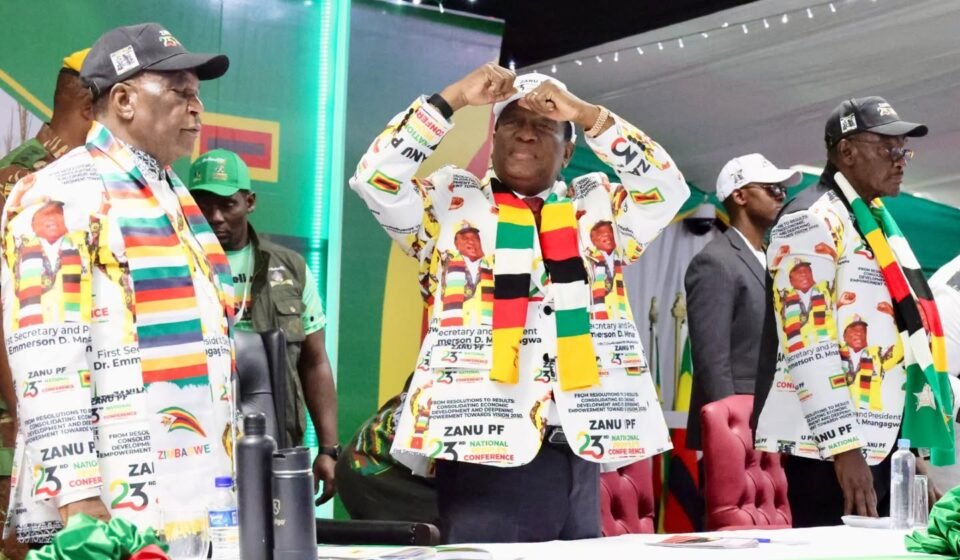
Delegates at the Chinhoyi conference came from the central committee, national consultative assembly, women’s league and youth league. Others came from provincial coordinating committees, provincial councils and district councils. They resolved to amend the party constitution to match the Supreme Law. This gives further effect to the hotly contested amendments that dominated this year’s political calendar.
The main resolutions are:
- Move the 2027 congress to 2029.
- President Mnangagwa remains party leader until then and seeks re-election at that time.
- He stays State President until 2030.
- In 2030, the party leader need not be the presidential election candidate.
- The party’s 10 provinces will nominate the presidential candidate, and the winner needs at least six provinces.
The new seven-year electoral cycle, up from five, follows the July 7 amendment.
Why an extraordinary congress
A senior official in the Zanu PF presidium explained the thinking. The central committee will implement the outcomes as the party’s supreme organ between congresses. But congress must still endorse and approve any change to the party constitution. “The best way to deal with this at the highest level is to convene an extraordinary congress soon,” the official said.
The conference reviews how the party and government implement policies. It assesses the state of the party and the economy. It also shapes strategic priorities for the coming year. It passes resolutions and forwards them to the central committee.
Conference ranks second in the party hierarchy, just below congress. The central committee and national consultative assembly come next, followed by the women’s and youth leagues. Provincial coordinating committees and provincial executive councils follow. District committees and cell and village committees come last.
Under Article 5, Section 24 of the party constitution, congress holds supreme authority over party policy and operations. It elects the President and First Secretary, as well as central committee members. It formulates party policies, directives and regulations. It also amends the constitution, approves financial accounts, considers resolutions and supervises the implementation of party rules and programmes. Section 566 sets the notice procedure for amendments.
Conference can pass policy resolutions. It cannot directly amend the constitution to change key leadership structures or cycles.
The process ahead
Zanu PF will call an extraordinary congress with a single agenda item. That item is amending the party constitution to align it with the national constitution.
The resolutions now go to the central committee. The politburo and departments such as the secretary-general’s and legal affairs offices will process them before congress.
The proposed amendments include:
- Longer terms of office: Terms for all leadership positions, from cell level to the central committee, will rise from five to seven years. This means amending Section 24 of the party constitution. Next year’s congress will automatically move to 2029, since the last one took place in 2022.
- Separating party and state leadership: The leader elected at congress will no longer automatically become the state presidential candidate. The party could then field a candidate who is not its leader in 2030. This follows the Nyerere transitional model.
- Two-thirds majority: Delegates must pass the amendment package with at least a two-thirds majority.
The national context
Constitutional Amendment No. 3 drives these changes. Parliament passed it in July. It extends presidential and parliamentary terms from five to seven years. This effectively pushes the next general election to 2030. It also moves the election of the president to a parliamentary vote instead of a direct popular vote.
Analysis: the strategic endgame
The manoeuvring works on two fronts.
First, stretching the electoral calendar to 2030 prolongs the Mnangagwa administration’s stay in power. It sidesteps his looming 2028 expiry date. It also gives him two more years to manage a volatile succession process.
Second, a joint sitting of Parliament will act as an electoral college. This minimises voter volatility. It also puts the keys to the presidency in the hands of the ruling party’s legislative majority. Installing a preferred candidate becomes far simpler.
The changes also neutralise immediate bids for power, particularly from Vice-President Constantino Chiwenga. They cement Mnangagwa’s leverage until the end of the decade. They also leave the door open for the party to field a separate presidential candidate in 2030.
The road from Chinhoyi University of Technology to an extraordinary congress shows Zanu PF’s dominance over both party and state legal machinery. By rewriting its statutes to mirror Amendment No. 3, the party has insulated its leadership from immediate electoral challenges. It has also secured Mnangagwa’s grip on power while managing an explosive succession battle.
Reporting based on original coverage by NewsHawks.