

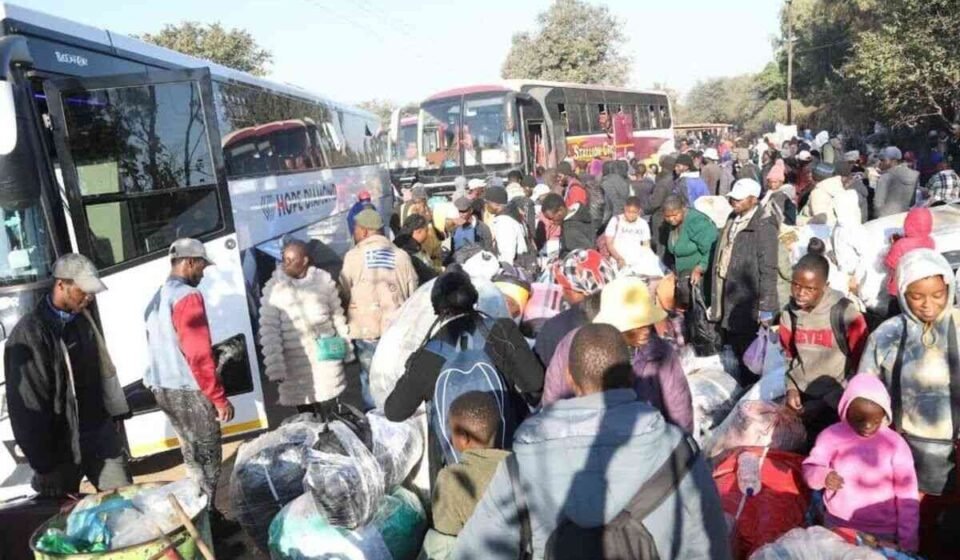
Beitbridge Mandates Screenings After 17k Vanish
By Staff Reporter – Beitbridge, Zimbabwe
At Beitbridge, Zimbabwe’s busiest border post, the Ministry of Health and Child Care has built a health screening operation running alongside the usual immigration and customs process — one designed to catch returning citizens and transiting travelers before they disappear into the country without medical follow-up.
The scale of what officials are working with is significant. Health authorities say roughly 108,000 people passed through Beitbridge in a single day, and the post has become a critical checkpoint not just for Zimbabweans returning home, but for travelers passing through en route to Malawi and Zambia.
A Clinic Built Into the Border Itself
Rather than treating health screening as a secondary concern to immigration processing, officials have placed a clinic directly at the post, screening both returnees and transit travelers alike. That second group turns out to be the harder one to manage: transit numbers through Beitbridge actually exceed the number of direct returnees, and officials acknowledge that around 17,000 transit travelers have effectively vanished into the country rather than continuing to their stated destinations — untracked, and outside any health system’s view. It’s a major part of why officials say universal screening, rather than spot-checks, has become necessary.
The 5-Day Bridge: Solving a Medication Gap
One of the more delicate problems the screening program addresses is what happens to people mid-treatment when they’re forced to travel unexpectedly — particularly patients on Antiretroviral Therapy (ART) for HIV, as well as those managing chronic conditions like hypertension and diabetes.
In practice, this breaks down in a few predictable ways:
- Left-behind medication — many returnees leave their supply behind in the rush to travel.
- Identification problems — patients often can’t name their medication, describing it only by color or shape.
- Regimen mismatches — South African treatment protocols don’t always line up directly with Zimbabwean drug regimens.
To prevent a dangerous gap in treatment, border health posts issue a short-term supply — enough for five days — rather than trying to fully diagnose and re-prescribe on the spot. The goal isn’t to replace a patient’s full treatment plan; it’s to buy enough time for them to reach wherever they’re going and get properly re-enrolled at a local clinic.
That five-day window is also a practical compromise. Officials are candid that stock constraints make longer emergency supplies unrealistic — handing out a month’s worth of medication sounds compassionate until the clinic runs out of stock two weeks in and has nothing left for the next patient. A shorter, sustainable supply, spread across everyone who needs it, is treated as the more responsible option.
How This Compares to the Old Approach
| Previous Approach | Current Strategy | |
|---|---|---|
| Border health focus | Limited mostly to acute outbreak response (e.g., thermal screening during COVID-19) | Continuous screening for both infectious disease and chronic illness |
| Treatment continuity | Returnees left to source their own prescriptions after arrival | On-site 5-day emergency dispensing plus referral to local clinics |
| Transit tracking | Minimal health monitoring for travelers passing through | Mandatory screening for all transit travelers |
Why the System Exists
A few overlapping public health risks are driving the shift:
- Disease spread — unscreened cross-border movement raises the risk of introducing or spreading infectious conditions like TB, cholera, or other viral illness across communities.
- Drug resistance — interrupted ART or chronic-disease medication doesn’t just harm the individual patient; it raises the risk of treatment failure and drug resistance more broadly, which is part of why the 5-day bridge exists in the first place.
- Better data and referrals — capturing health information at the point of entry lets the national health system connect returnees to their local district or village clinic immediately, rather than waiting for them to self-report.
The Bigger Picture: What’s Still Missing
Border clinics can handle the immediate emergency, but officials and observers point to a longer list of structural gaps that still need addressing:
Where things could go next:
- A regional digital health record system linking SADC countries, so clinicians could see a patient’s treatment history instantly instead of guessing from pill color and shape
- Harmonized drug regimens across South Africa, Zimbabwe, Zambia, and Malawi, so prescriptions could continue seamlessly across borders
- Mobile, community-based integration clinics at the district level to handle bloodwork, viral load testing, and full re-enrollment for returnees
What’s still working against the system:
- Transit travelers who disappear into local communities before they can be tracked or referred
- Supply pressures at entry points that risk draining stock meant for domestic clinics
- Language and communication barriers that make it hard to get an accurate medical history from returnees who are stressed, in transit, and often unsure of their own diagnosis or medication details
For now, the model relies on catching what it can at the border and handing off the rest to the local health system — treating both the immediate humanitarian need and the longer-term goal of keeping disease surveillance and chronic care from falling through the cracks of cross-border movement.