

Who Really Benefits From Harare’s Vendor Crackdown?
By Yvette Choga
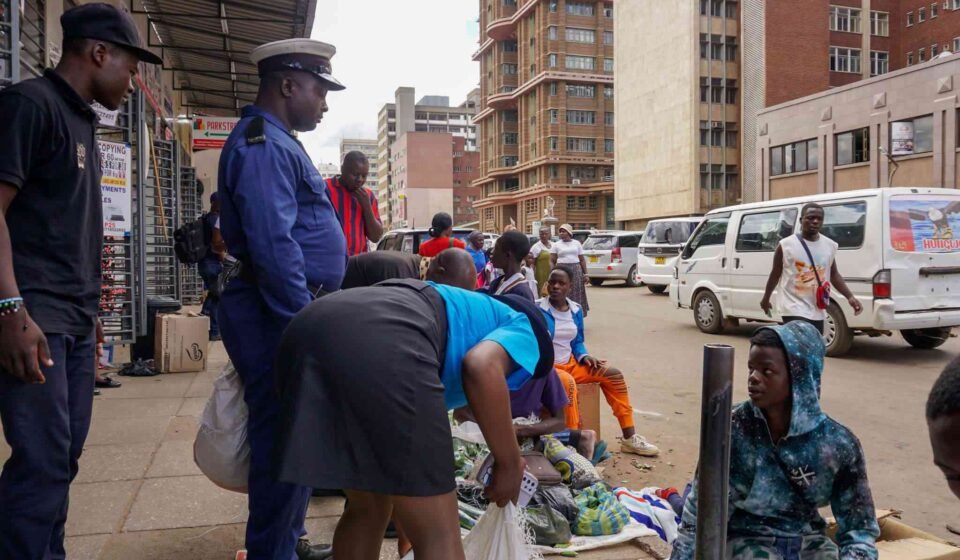
Zimbabwe’s government has launched its most aggressive push in years to clear informal traders off Harare’s streets. Under Operation “Chenesa Harare,” municipal police have been given a mandate to dismantle unauthorised vending structures, with the exercise set to roll out nationwide.
Officials call it a public order and sanitation drive. But the timing — and the identity of some of its loudest backers — has left many Harare residents asking an uncomfortable question: who is this operation really designed to protect? The city, or the profit margins of the country’s biggest retail chains?
A Suspicious Coincidence?
The clean-up is unfolding at almost the exact moment OK Zimbabwe, one of the country’s largest supermarket chains, is climbing out of a severe cash-flow crisis.
The retailer entered corporate rescue in February 2026, weighed down by more than US$30 million in supplier debt. It has now secured bank guarantees that have unlocked fresh stock from major manufacturers, letting it reopen branches it had previously closed. Notably, its own rescue documentation pointed to one contributing factor: the rapid growth of informal traders and tuckshops, which operate with far lower overheads and pulled customers away from formal stores.
Around this same window, the Confederation of Zimbabwe Retailers (CZR) — the body representing formal retailers and wholesalers — publicly backed the crackdown. It argued that illegal vending put law-abiding businesses at an unfair disadvantage, and even pushed for the same enforcement logic to be extended to commuter omnibuses.
Put side by side, the sequence is striking:
- A major retailer wounded by vendor competition begins restocking.
- Its industry association applauds a state operation to physically remove that same competition from outside its stores.
- Both happen in the same narrow window.
A necessary caveat: none of the public statements from government, CZR, or OK Zimbabwe show a direct, coordinated arrangement behind the crackdown. Officials have consistently framed the operation around congestion, sanitation, and national development targets rather than any commercial motive. Minister Daniel Garwe has insisted the drive is “not a declaration of war against vendors.”
Whether the alignment of interests is coincidence, opportunism, or genuine lobbying behind closed doors is something only a formal investigation could settle — not speculation. What is verifiable is the pattern: formal retailers stand to gain measurably if the operation succeeds, and one of their trade bodies has said so publicly.
Why Shoppers Keep Choosing the Pavement Over the Supermarket
Whatever the motive behind the crackdown, it doesn’t change the economic reality that pushed shoppers toward vendors in the first place. Two things keep drawing Zimbabweans to informal traders:
Affordability. Vendors typically pay little or no rent and carry no corporate overheads. That lets them undercut supermarket shelf prices — a critical edge in an economy where formal wages haven’t kept pace with the cost of living.
Flexibility. Street traders sell in small, affordable units — a handful of tomatoes, a single bar of soap, a few sweets — instead of forcing cash-strapped households into bulk purchases. Many also allow haggling, informal credit for regular customers, and hours that stretch well beyond a typical shop’s.
For a household budgeting day to day, that mix of lower prices and negotiable quantities often matters more than the polish of a formal store.
The Trade-Off Consumers Rarely Consider
Those same advantages carry real risks, precisely because they come from the absence of regulation.
- No quality or safety oversight. Formal retailers face health inspections, storage standards, and traceability rules. Much of what’s sold informally — especially perishable food, cosmetics, and medicines — bypasses that entirely, raising the risk of spoiled goods, unsafe additives, or counterfeits.
- No consumer recourse. A supermarket selling a defective product leaves a paper trail and a legal entity to hold accountable. A vendor who has packed up and moved on leaves none.
- Poor storage and handling. Goods on pavements or open-air stalls are exposed to dust, sun, and inconsistent refrigeration — a real risk for perishables.
- Counterfeit and substandard goods. CZR has specifically flagged the informal sector’s role in circulating fakes, from imitation electronics to counterfeit pharmaceuticals.
In short: the features that make vendors attractive — minimal overhead, minimal paperwork, minimal oversight — are the same features that strip away consumer protection.
A Middle Path: Formalising Without Destroying Livelihoods
The “We the People” petition, echoed by groups like VISET and the Harare Residents Trust, makes a hard-to-dismiss point: Harare’s designated markets, as they stand, cannot absorb the scale of the informal workforce.
City Council’s own data shows roughly half of Harare’s registered vending stalls sit empty — often not because vendors are being stubborn, but because those sites are poorly located, badly maintained, or cut off from the foot traffic that sustains a trading livelihood.
A durable fix would need to close that gap rather than simply criminalise the people caught in it:
- Build markets where the customers already are. Relocating vendors to underused sites far from natural foot traffic, then expecting demand to follow, hasn’t worked.
- Use phased, negotiated timelines instead of blanket week-long ultimatums, so traders have realistic time to register and transition.
- Keep registration and stall fees low. Many vendors operate on thin margins and can’t absorb steep formalisation costs upfront.
- Fund basic site infrastructure — shelter, lighting, sanitation, secure storage — so a formal stall is a genuine upgrade, not a demotion.
- Open access to microfinance or cooperatives, helping displaced vendors formalise or transition into other livelihoods.
- Treat vendor associations as negotiating partners. Groups like the Zimbabwe National Vendors Association deserve a real seat at the table in shaping enforcement, not just notice after the fact.
Resistance on the Ground
None of this has stopped vendors from pushing back. Long-time CBD trader Cephas Muchegwa, like many others, argues he has no viable alternative in an economy with scarce formal jobs — some vendors are university graduates unable to find corporate work.
Past Harare clean-up campaigns have followed a familiar cycle: enforcement, temporary clearance, and a gradual return of traders once police attention moves elsewhere. Without addressing the deeper pressures — mass unemployment, currency instability, a shrinking formal job market — even a well-resourced operation risks repeating that pattern.
The Bottom Line
The overlap between OK Zimbabwe’s recovery, CZR’s public endorsement, and the state’s crackdown deserves continued scrutiny and reporting. But as things stand, it’s circumstantial — not proven coordination.
What’s clearer is that Harare’s vending crisis is a symptom of deeper economic dysfunction. Clearing pavements alone won’t resolve either the retailers’ competitiveness problem or the vendors’ survival problem. Formalising trade without pricing people out of a livelihood is a harder path than a week’s ultimatum — but it’s the one more likely to outlast the next clean-up cycle.