

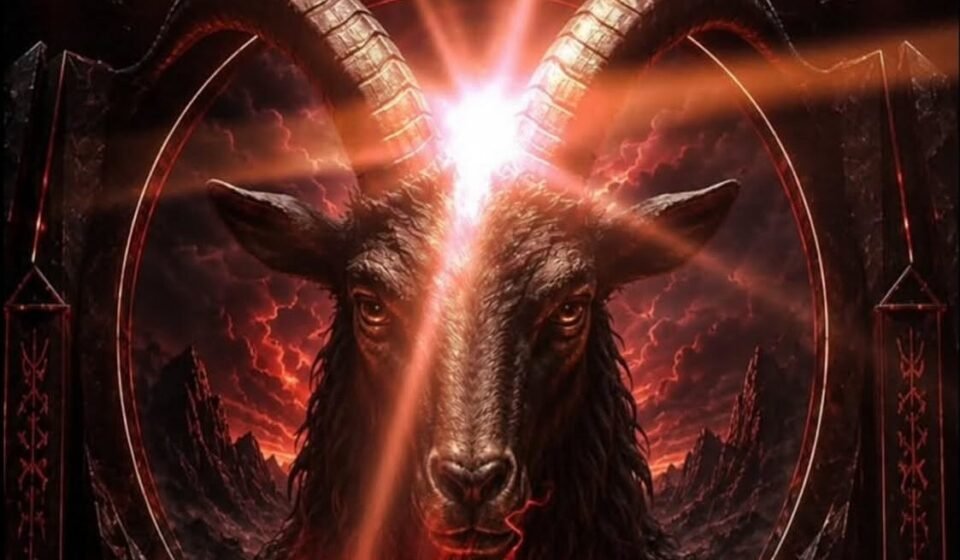
Artist’s Poster Provokes Intense Debate
By Staff Reporter
A promotional flyer for Winky D’s upcoming Tete a Tete Season 2 show has ignited a genuinely polarized social media debate, with some fans raising concerns over its imagery and others dismissing the controversy as a misreading of the artist’s creative intent.
What Actually Happened
The controversy erupted after ZiFM Stereo shared the event flyer on Instagram on 15 July 2026, ahead of the show scheduled for Saturday, 29 August at Alex Sports Club, presented by Chipaz Promotions and Harris Ent. The poster’s design — featuring goat imagery — drew immediate, sharply divided reaction in the comments. Some fans claimed the artwork carried Illuminati-style symbolism and said they’d avoid the concert as a result; others pushed back hard, arguing the goat was a straightforward visual nod to Winky D’s long-running “GOAT” (Greatest of All Time) nickname, and that critics were reading occult meaning into what was simply a play on the acronym.
Neither side of that debate is verifiable as objectively “correct” — it’s fundamentally a dispute over how to interpret a piece of promotional art, and reasonable fans have landed on both sides of it.
Winky D’s Enduring, Complicated Popularity
Despite recurring controversies — some tied to imagery, others to song lyrics widely read as political commentary — Winky D’s cultural relevance hasn’t diminished. He’s frequently described as a voice for a generation of urban, working-class Zimbabweans, someone whose music has repeatedly become a vehicle for broader social frustration well beyond the songs themselves. That same prominence is part of why his choices, including something as ordinary as a concert flyer, generate this much public discussion in the first place.
A Rivalry That’s Bigger Than Music
The reaction to Winky D’s poster is inseparable from his long-running, often externally amplified “rivalry” with fellow musician Jah Prayzah — a dynamic that has taken on a distinctly political flavour at times. In one notable instance in early 2026, a senior government spokesperson posted comments widely interpreted as favouring Jah Prayzah as Zimbabwe’s “true GOAT” while dismissing Winky D as an artist manufacturing rivalry to stay relevant. The remarks — which named no one directly but left little doubt about their target — drew significant public backlash, with critics accusing the official of using his office to wade into a cultural debate that wasn’t really his to referee.
That episode is often cited as evidence for a broader pattern: Jah Prayzah has maintained a public, high-profile association with businessman Wicknell Chivayo, including accepting high-value gifts, while Winky D has generally kept his distance from that kind of elite patronage — a distinction fans on both sides of the “rivalry” bring up constantly when the debate resurfaces.
The Mapfumo Comparison
The scrutiny of Winky D’s imagery has landed at a moment when questions about artistic independence versus patronage are already unusually prominent in Zimbabwean music. Chimurenga legend Thomas Mapfumo’s recent decision to accept a large, Chivayo-funded performance deal — after previously rejecting money from the same businessman — sparked its own significant debate about whether Zimbabwean artists seen as champions of ordinary people can accept elite money without compromising that reputation.
Set against that backdrop, Winky D’s brand — built on a perceived resistance to exactly that kind of co-optation — is arguably held to a different standard by his own audience than artists more comfortable with public patronage. A concert poster that might pass without much comment from a differently-positioned artist becomes, for Winky D specifically, a referendum on whether he’s still the artist his fans believe him to be.
The Bigger Picture
Strip away the specific symbolism debate, and what’s left is a genuinely interesting pattern in Zimbabwean pop culture: audiences appear to hold artists associated with independence and grassroots credibility to a much higher standard of scrutiny than those who’ve openly embraced elite patronage — a dynamic that says as much about what Zimbabwean fans want their cultural icons to represent as it does about any single poster.
Event details and public reaction referenced here are drawn from Zimbabwean entertainment and political media coverage as of July 2026.