

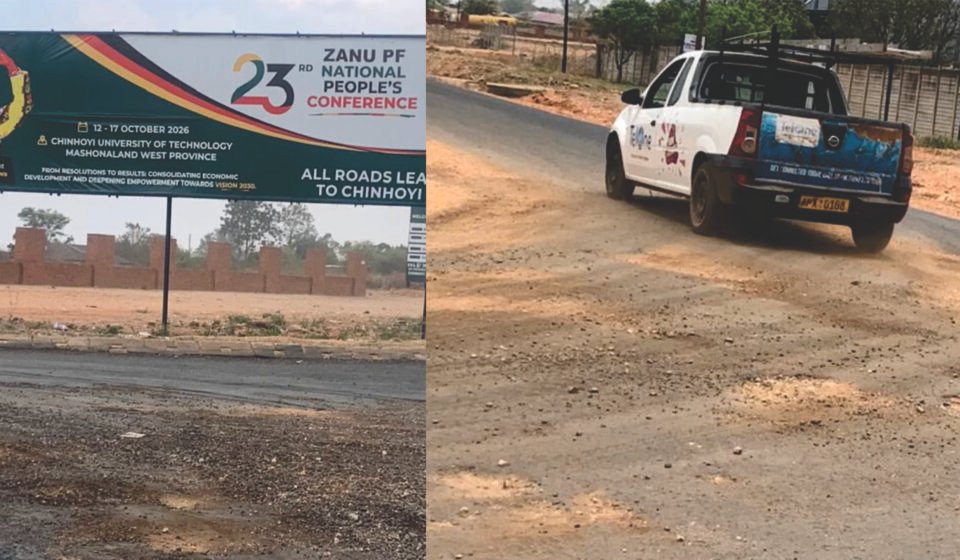
Two Weeks After Zanu PF’s Conference, Residents Report Crumbling Roads and Water Shortages
Story By Staff Reporter
Zanu PF’s twenty-third Annual People’s Conference ended with claims of rapid infrastructure improvements in Chinhoyi. Away from the political speeches, however, residents of Gadzema and nearby townships say their taps remain dry. They also say the newly patched roads are already breaking up.
Minister Claims Water Reached Over 4,000 Households
Local Government Minister Daniel Garwe announced that conference-related projects had delivered clean running water to more than four thousand households. Residents’ accounts, however, raise questions about how far those improvements reach and how long they will last.
Before the conference, parts of Chinhoyi received a facelift. Authorities repaired roads and carried out other visible works to showcase development to visiting delegates.
In Gadzema and the surrounding townships, residents say the transformation has not reached their homes. For them, development does not mean what visitors see along prominent routes. It means reliable water, working sanitation and roads that can handle everyday traffic. Residents say these basic services remain a challenge.
Residents Describe Cosmetic Repairs
Some residents also allege that many pre-conference improvements were cosmetic. They accuse the authorities of putting appearances ahead of lasting solutions. As an example, they point to the selective painting of just four households along major routes, while other homes and neighbourhoods remain neglected.
The road repairs have also drawn scrutiny. Residents report that some patched sections are already deteriorating. These concerns raise questions about the planning, quality and oversight of the projects undertaken ahead of the conference. Temporary repairs may improve appearances in the short term. Residents, however, want infrastructure that will serve them long after the visiting dignitaries have left.
Municipality Blames Traffic for Road Damage
Chinhoyi Municipality has defended aspects of the road repairs, but questions remain over the reported water connections. The municipality’s spokesperson, Chaona Mulauzi, declined to comment directly on the minister’s remarks at the conference. Mulauzi said the municipality could not speak for what the minister said.
On the deteriorating roads, Mulauzi blamed traffic diversions and heavy vehicles. According to the spokesperson, motorists used freshly patched sections before the repairs had fully set. This explanation, however, leaves questions about the timing of the repairs and about traffic management. It also raises the question of whether the authorities did enough to protect the new patches.
The spokesperson was also unable to provide the total number of households in Chinhoyi immediately. That figure would help put the claim of more than four thousand households into context. Without it, and with residents still reporting dry taps, the reach of the water project remains unclear.
Key Questions Remain Unanswered
Three questions now stand out:
- How many households have been connected?
- How many of them actually receive water?
- Do the improvements represent a lasting expansion of municipal services?
The municipality’s response addresses the damaged roads. It does not, however, independently verify the minister’s claim about the number of households benefiting from the water project.
Residents Call for Transparency
The dispute highlights the need for transparent reporting and accountability on local infrastructure projects. Minister Garwe’s announcement set out a measurable claim. Confirming it requires verifiable connections, clear figures and evidence that residents are receiving water.
The condition of the repaired roads likewise raises questions about construction quality, project timing and traffic management. For residents of Gadzema and the surrounding townships, the measure of progress is simple. They want water from their taps, roads that last and public services that work beyond the conference spotlight.
Until those outcomes are demonstrated, the promised transformation will remain under scrutiny. An update from the municipality on its household figures, together with verification of the reported connections, would help establish the real extent of progress.