
Tagwirei Enters Zanu PF Top 6 Power Circle
Story By Staff Reporter
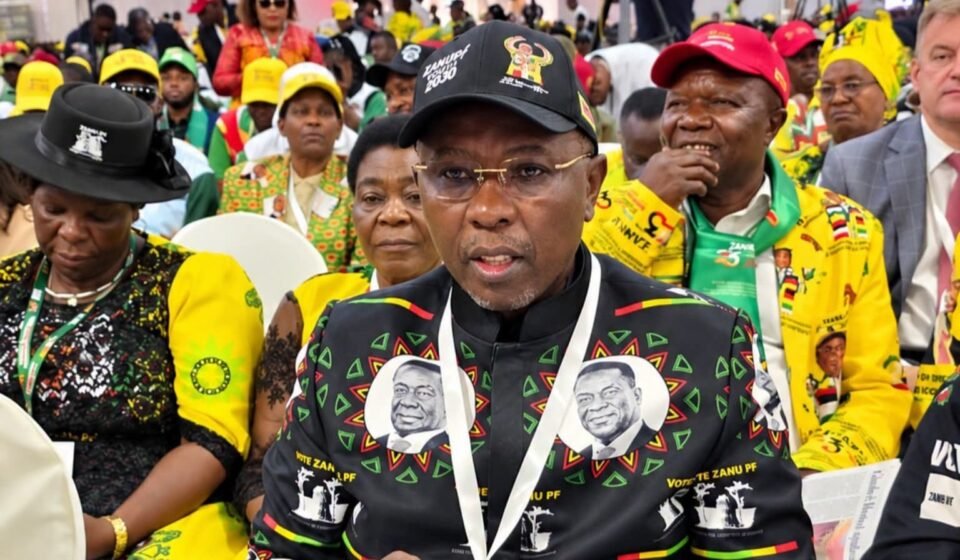
Billionaire Kudakwashe Tagwirei yesterday sat at the centre of Zanu PF’s supreme decision-making body for the first time. President Emmerson Mnangagwa invited him to a critical meeting of the party’s Top 6 in Chinhoyi.
A Week of Rapid Promotions
Tagwirei publicly denies any presidential ambitions. Yet his ambitions look self-evident and are growing, and they pit him against Vice-President Constantino Chiwenga, who also wants the top job.
This marked a meteoric week for the businessman. Mnangagwa swore him in as Economic Development and Investment Promotion minister on Monday. On Thursday, the party appointed him politburo secretary for the same portfolio.
Yesterday, Tagwirei joined the Top 6 meeting as part of the conference organising committee. His job was to ensure that everything was in order before the conference started.
Who Attended the Chinhoyi Meeting
Mnangagwa chaired the meeting. His two deputies, Chiwenga and Kembo Mohadi, attended. So did party chairperson Oppah Muchinguri-Kashiri and Secretary-General Jacob Mudenda.
The organising committee plans and coordinates the conference. It works with sub-committees, such as the fundraising sub-committee, which local tycoon Philip Chiyangwa chairs.
A party source explained the meeting’s purpose. “As per tradition before annual conferences, the Top 6, which forms the core of the organising committee, met in Chinhoyi before the event officially opened. Tagwirei was invited to the meeting by the President. This shows his growing role in the party, moving from the shadows as a funder to the centre of the decision-making apparatus and matrix.”
The source added that the meeting went smoothly. “It was held in harmony, good spirit and mutual respect because it was merely looking at the agenda, logistics and the programme; coordination issues.”
From Tycoon to Front-Line Politician
Tagwirei has risen quickly from prominent business tycoon to front-line politician. He now holds key roles in both government and the ruling party. These include presidential adviser, land implementation committee chairman, central committee member, senator and minister.
As a result, he now stands at the centre of the country’s economic decision-making. He also sits at the heart of the succession battle.
The Succession Battle
For years, many people saw Chiwenga as the inevitable successor. The retired general engineered the 2017 coup that removed the late Robert Mugabe and installed Mnangagwa.
However, several factors have since thrown Zanu PF’s succession timeline wide open. These include deep factional divisions, ethnic dynamics, regional rivalries and transactional politics. Mnangagwa’s fears of life after power add to the uncertainty.
Political analysts see Tagwirei’s successive promotions as a calculated move. They believe Mnangagwa’s faction wants an ultra-loyal successor. That person would protect Mnangagwa, his family and their financial interests ahead of the next party congress and the 2030 elections.
Congress Moves to 2029
Constitutional amendments enacted on 7 July extended Mnangagwa’s tenure to 2030. The new seven-year electoral cycle comes from Constitutional Amendment Act No.3. As a result, the party must align its own constitution with the national one.
Consequently, Zanu PF will postpone its 2027 congress to 2029, not 2030, after the conference resolutions. The last congress took place in 2022, so the next one will automatically fall in 2029. The party normally holds its congress a year before general elections to endorse its presidential candidate.
Zanu PF wants Mnangagwa to remain party leader in 2029 and beyond. At the same time, it plans to field someone else as presidential candidate in 2030. With the way things are going, that person is most likely Tagwirei.
Boxing Out the Chiwenga Faction
By embedding Tagwirei in the highest organs of both party and state, Mnangagwa builds a fortress around his factional network. In effect, he boxes out the Chiwenga faction.
If Tagwirei succeeds, he will become the first post-colonial leader of Zimbabwe without liberation war credentials. That would mark a tectonic generational shift.
Reporting based on original coverage by NewsHawks.