

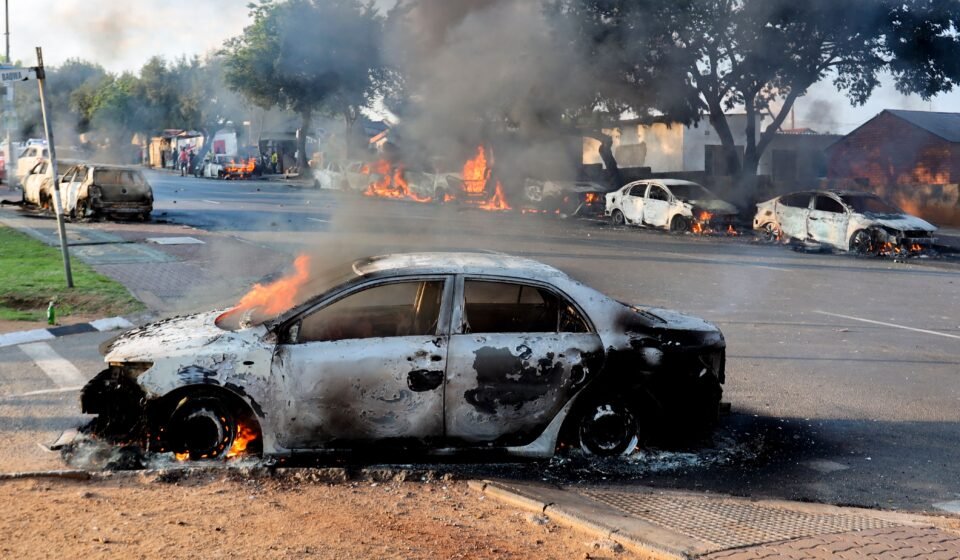
Vehicles burned and foreign-run shops looted in Durban and Soweto
Story By Staff Reporter
Police say protesters set at least 24 vehicles on fire and looted foreign-owned shops. Anti-immigration protests turned violent in two major South African cities.
Unrest began on Thursday in Soweto, a large township outside Johannesburg. It also hit Durban, a major port on the east coast.
Anger over a court ruling
Anger is growing over a court ruling that lets some migrants who entered the country illegally apply for asylum. Long queues formed outside immigration centres. On Friday, the government said it would change how it complies with the ruling. It gave no details.
The Department of Home Affairs said the current policy had overwhelmed its staff. It also said “serious threats to public safety and order had emerged”. The department said the new policy would still follow the Constitutional Court ruling.
South Africa has seen repeated outbreaks of xenophobic violence. Migrants from neighbouring countries are often the targets.
Clashes in Durban
Thursday’s demonstration turned violent after claims that a foreign national had assaulted a protester in Durban. Police arrested three foreign nationals over the alleged assault.
Protesters gathered outside a government refugee reception centre in Durban, in KwaZulu-Natal province. They demanded that it stop accepting asylum applications. Police fired rubber bullets to disperse the crowds. Businesses in the city centre shut their doors.
“There were clashes between foreign nationals in the area and South African nationals,” senior local police officer Xolani Fihla told state broadcaster SABC. He added that police had received no reports of injuries.
Shops attacked in Soweto
Police said protesters burned 14 vehicles in Durban and 10 in Soweto. Police also reported gunshots in Soweto during confrontations between residents and foreign shopkeepers. Acting national police commissioner Lt Gen Puleng Dimpane condemned the destruction of property.
In Orlando West, a Soweto neighbourhood, residents first gathered to demand that foreign-run convenience stores close. Locals call these stores spaza shops. Local media reported that protesters forced foreign traders out of some areas, attacked shops and set a building on fire.
Police sent reinforcements to prevent further violence. Authorities promised to pursue those responsible.
What the ruling says
The unrest follows a July ruling by the Constitutional Court, South Africa’s highest court. The court struck down restrictions that stopped some people from seeking asylum because of how they entered the country or because they missed immigration deadlines. Asylum seekers can now submit applications even if they entered without the required documents.
Hundreds of people gathered at refugee reception centres. This angered anti-immigration campaigners, who fear the decision will encourage undocumented migration.
Government spokesman William Baloyi told Reuters that people had deliberately spread false claims about the judgment. These claims suggested that undocumented migrants would automatically receive legal status. Baloyi insisted the ruling does not grant automatic refugee status or a permanent right to stay. Officials say they will assess each application individually, and applicants will still face immigration checks.
A long history of xenophobic violence
The protests forced tens of thousands of migrants to flee. Some returned home through repatriation programmes that their governments organised.
South Africa has struggled with xenophobic attacks for nearly two decades. In 2008, attacks on foreign nationals killed more than 60 people and displaced tens of thousands.
The latest unrest comes amid widespread poverty, deep inequality and unemployment affecting roughly a third of the workforce. Many people accuse migrants of taking jobs, causing crime and straining public services. Researchers say evidence does not support these sweeping claims.
Despite its economic difficulties, South Africa remains one of the continent’s main destinations for migrants seeking work, safety and better opportunities.
Reporting based on original coverage by BBC.