

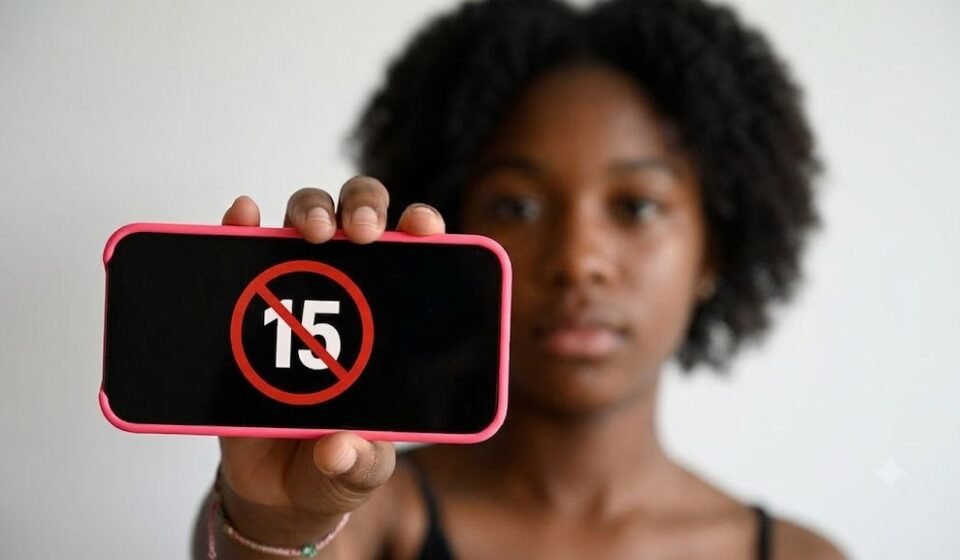
France’s Under-15 Social Media Ban: Lessons for Zimbabwe
By Staff Reporter
In July 2026, France’s parliament did something no other European Union country had done before: it voted to ban children under 15 from having social media accounts at all. President Emmanuel Macron called it a “major step forward.” Digital Minister Anne Le Henanff said the rollout was realistic because “age-verification tools already exist.” Arcom, France’s media regulator, will enforce it — and under-15s in the country currently spend an average of 1 hour and 21 minutes a day on TikTok alone.
France now joins more than 20 countries worldwide that have taken some step toward regulating children’s access to social media, following Australia’s world-first ban for under-16s, which took effect in December 2025.
For a country like Zimbabwe — where smartphone access is growing fast but digital literacy programs and content moderation infrastructure are not — this raises a real question: is a blanket age ban the right model to copy, or a policy that looks good on paper and fails in practice?
What France Actually Passed
It’s worth being precise here, because a lot of online commentary about this law is already out of date or wrong.
- The ban applies in two stages. From September 1, 2026, platforms must block under-15s from creating new accounts. Existing underage accounts won’t be required to close until January 2027, giving platforms and families a transition window.
- Enforcement sits with Arcom, not with police or schools. The legal and financial burden falls on the platforms themselves, not on children or parents.
- The law also bans phones in French middle schools, extending a rule that has applied to primary schools since 2018.
- It followed a specific trigger: a fatal school stabbing in eastern France, an investigative parliamentary inquiry into social media’s effects on youth, and private lawsuits accusing TikTok of fueling addiction, depression, and anxiety in teenage users.
- An earlier, tougher draft was watered down. Proposals to ban influencer advertising aimed at children, and to force platforms to carry “dangerous for under-15s” warnings, didn’t make it into the final bill.
This detail matters for the debate: France didn’t ban social media outright for teenagers. It banned account creation and ownership below a specific age, while leaving the door open for older enforcement mechanisms to catch up over 18 months.
The Case for the Ban
1. Adolescent brains are still under construction. The prefrontal cortex — responsible for impulse control and emotional regulation — isn’t fully developed until the mid-20s. Proponents argue that algorithmic feeds engineered for maximum engagement exploit exactly the systems teenagers are least equipped to regulate: reward-seeking, social comparison, and compulsive checking.
2. Legal precedent already exists for treating minors differently online. This isn’t a new legal idea. The 1968 U.S. Supreme Court case Ginsberg v. New York affirmed that states can restrict minors’ access to material legal for adults. The EU’s Digital Services Act already requires platforms to build “safer by design” experiences for minor users. France and Australia are extending an established legal principle, not inventing one.
3. For developing economies, the risk profile is arguably worse. Countries with fewer local content-moderation teams, weaker digital literacy curricula, and less regulatory leverage over foreign-owned platforms have fewer tools to intervene short of an age gate. Where a government can’t easily compel a platform to change its algorithm, restricting access becomes one of the few levers available.
Why Critics Think It Won’t Hold Up
1. Age verification has an obvious workaround problem. Generative AI now makes it trivial to alter a photo or fabricate a document. VPN usage reliably spikes the moment a geographic restriction goes live. And the simplest workaround of all — a child logging in with a parent’s or older sibling’s account — requires no technology at all.
2. Verifying age without invasive surveillance is a genuinely unsolved problem. If platforms are told to check, the practical options are government ID uploads or biometric facial scans — for every user, not just minors, since you can’t know someone’s age without asking. That creates large, centralized stores of sensitive personal data, which are exactly the kind of target that produces major breaches.
3. The law only really binds the platforms. France and Australia both put fines on the tech companies rather than on families. That avoids criminalizing children, but it also means enforcement outcomes depend on whether platforms comply in good faith — and offshore or non-EU platforms are harder to compel at all.
4. Blanket cutoffs sit awkwardly next to existing legal doctrine on maturity. English law’s concept of Gillick competence (from Gillick v West Norfolk, 1986) already established that a minor under 16 can consent to medical decisions if they can demonstrate sufficient understanding. A hard age cutoff for social media treats a 14-year-old and a 14-year-old-and-364-days identically, and ignores that maturity doesn’t arrive on a birthday.
Does It Actually Work? Australia’s Early Numbers
Australia’s under-16 ban — covering Facebook, Snapchat, TikTok, and YouTube — has been in force since December 2025, giving the world its first real dataset.
| Metric | Early Outcome in Australia |
|---|---|
| Account removals | Millions of under-16 accounts closed by platforms |
| Workarounds | A meaningful share of teens shifted to VPNs or lesser-known apps |
| Parental sentiment | Broad support for having a clear line, even an imperfect one |
| Root-cause impact | Critics note it restricts access but leaves algorithmic design — the thing actually driving compulsive use — untouched |
The honest read: the ban measurably reduced the number of under-16 accounts on major platforms. It did not eliminate underage use, and it did nothing to change how the platforms’ recommendation systems function for the users who remain.
What This Means If You’re Watching From Zimbabwe
A straight copy of the French or Australian model would face extra friction in a market where:
- Verification infrastructure (national digital ID systems) is far less mature than in the EU or Australia
- Enforcement leverage over foreign-owned platforms is weaker
- Data-privacy protections around any new ID-verification system would need to be built, not just switched on
That doesn’t mean the underlying goal — protecting minors from unmoderated exposure — isn’t worth pursuing. It means the mechanism matters more than the headline age number. Three things tend to move the needle regardless of legal framework:
- Default-safe settings for known minor accounts — restricted content mode, no targeted advertising, no public DMs — which don’t require invasive verification to implement
- Algorithmic accountability rules aimed at infinite-scroll and engagement-maximizing recommendation systems, which address the mechanism doing the harm rather than just gating the door
- Digital literacy education, which is the only intervention on this list that still helps a child after they inevitably encounter an unmoderated app
The Bottom Line
France’s law is more carefully staged than most headlines suggest — an 18-month rollout, platform-side enforcement, and a narrower scope than early drafts proposed. Australia’s early results show a ban can meaningfully cut underage account numbers without eliminating underage use altogether.
The uncomfortable truth for policymakers everywhere, developing economies included, is that age bans address access, not the underlying mechanics — the recommendation algorithms, the engagement design, the ad models — that make these platforms risky for young users in the first place. A durable policy probably needs both: a credible age line, and rules that change what happens once someone is inside the app.