

Public Pushes Back on U.S. Embassy Mineral Pitch
By Staff Reporter
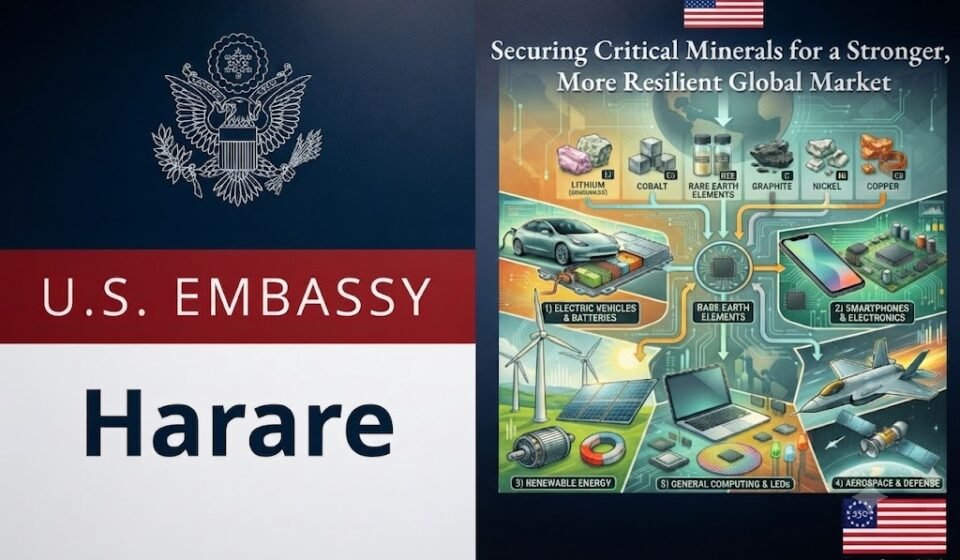
A social media announcement from the U.S. Embassy in Zimbabwe, signaling interest in partnering on the development of critical minerals like lithium, cobalt, and rare earth elements, has set off a wide-ranging public debate. The U.S. framed the proposal as a “win-win” opportunity — promising local job creation, technology transfer, and sustainable growth. The public reaction tells a more complicated story: real skepticism, competing geopolitical loyalties, and firm demands for what a fair deal should actually look like.
What Zimbabweans Are Actually Asking For
Underneath the debate is a consistent theme: for many commenters, the identity of the trading partner matters less than the substance of the deal itself. There’s broad agreement that Zimbabwean communities need to see genuine value from their own natural resources — treated not as a favor granted by an outside partner, but as a birthright tied to the country’s own mineral wealth.
A few themes come up repeatedly:
- Value addition, not just extraction — Strong public support exists for moving beyond simply exporting raw minerals, toward domestic processing, refining, and industrialization that lets the country capture more of the value itself.
- Transparency and governance concerns — Regardless of which country is involved, many worry that mineral deals risk enriching a small number of individuals rather than benefiting national or community development.
- Historical trust deficits — Sanctions and years of diplomatic tension with the West remain a real barrier for many citizens, who view the sudden U.S. interest in Zimbabwean minerals with suspicion — questioning whether it’s a genuine shift or an opportunistic one.
A Geopolitical Tug-of-War
The debate also exposes how divided public opinion is on which international partnerships actually serve Zimbabwe best.
The case made for U.S. engagement: Supporters argue that American investment could bring stronger accountability standards, meaningful infrastructure development, and a valuable diversification away from Zimbabwe’s current concentration of trading partners — potentially helping build a more professionalized industrial base around mining.
The case made for existing partnerships: Others see China as the more proven and reliable partner, pointing out that it hasn’t imposed sanctions on Zimbabwe the way Western countries have. Some go further, arguing Zimbabwe should prioritize deepening ties within BRICS before entertaining a pivot toward the West.
A third perspective — the diaspora angle: A notable strand of commentary suggested a different framing altogether: that future partnerships should prioritize collaboration with the African American community and the broader African diaspora, on the theory that cooperation within diaspora networks could produce more ethical, mutually beneficial outcomes than dealing with either global power bloc directly.
What “Win-Win” Would Actually Require
The public backlash to the Embassy’s announcement functions as something like a barometer — a read on what Zimbabweans would actually need to see before welcoming a partnership like this. The demands that keep surfacing are specific:
- Remove practical barriers — bureaucratic and trade obstacles that currently make cross-border investment harder than it needs to be
- Deliver tangible local benefit — infrastructure, skills transfer, and development that reaches the communities where mining actually happens, not just national-level statistics
- Respect sovereignty — structure any deal so Zimbabwe’s own interests come first, with transparent terms on revenue-sharing and resource management
The Bigger Picture
What the reaction ultimately reflects is a public that’s acutely aware of the value sitting in the ground beneath them, and increasingly unwilling to accept vague promises in exchange for it. Whether this particular partnership moves forward will likely come down to whether Washington — or any partner, for that matter — can close the trust gap and back its “win-win” language with terms Zimbabweans can actually verify.
The open question, as always in these situations, is one of leverage and follow-through: how does a government balance competing offers from major powers without simply repeating the extraction-heavy patterns of the past?