

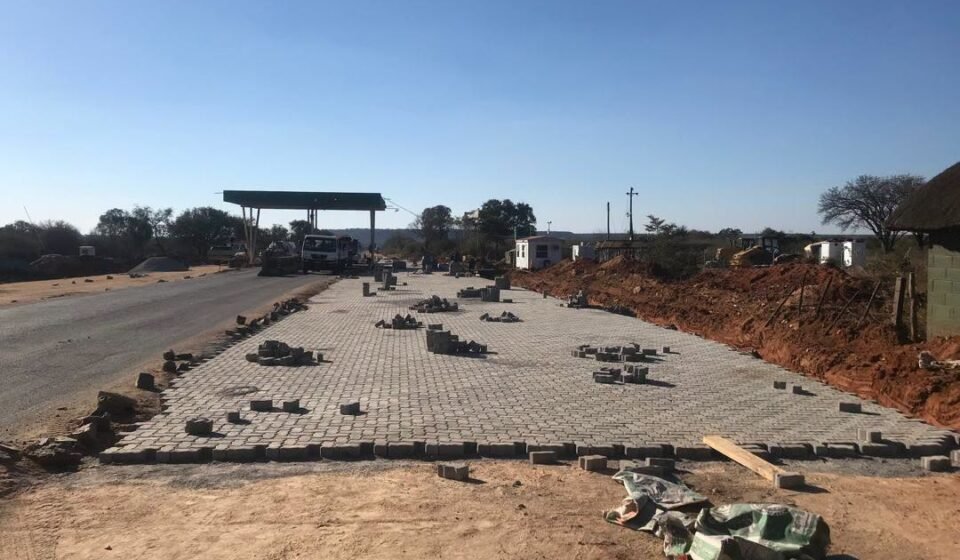
Residents slam ZINARA: Toll profits over road repairs
By Staff Reporter — Bulawayo, Zimbabwe
The Zimbabwe National Road Administration (ZINARA) recently took to social media to celebrate progress on the Umguza Tollgate Lane Widening Project — a collaboration with Umguza Rural District Council that will expand tollgate approaches from one lane to three in each direction and add a dedicated e-Tag Express Lane. In ZINARA’s telling, this is a story of efficiency, partnership, and modernization.
For the average Zimbabwean motorist navigating the country’s road network, though, the announcement lands differently. It’s a reminder of an organization that appears far more invested in refining how it collects money than in the state of the roads people are actually driving on.
A Familiar Pattern
The Umguza project isn’t an isolated example. It sits alongside a broader push: ZINARA has recently expanded toll plazas at Inkomo and Lion’s Den from four lanes to six, and is rolling out RFID-based e-Tag technology at tollgates nationwide in partnership with a private technology firm, as part of a modernization drive covering the country’s 29 tollgates.
Each of these projects is framed the same way — improved traffic flow, reduced congestion, a better “motorist experience.” What’s less visible in ZINARA’s own announcements is a comparable level of investment in the actual road surfaces connecting one tollgate to the next.
The irony can be stark: motorists frequently navigate long, pothole-riddled stretches only to arrive at a freshly modernized tolling plaza. Whether or not that’s ZINARA’s intent, it’s the lived experience that shapes how the organization is perceived — and it fuels a narrative that toll collection, not road quality, is the real priority.
The Road to Victoria Falls
The clearest case in point is the Bulawayo–Victoria Falls Highway. For years, this 435km corridor — a critical route for tourism, regional trade, and cross-border commerce with Zambia, Botswana, and Namibia — has been degraded by potholes, narrow lanes, and eroded shoulders. A 2026 editorial in The Zimbabwe Independent noted that some tourists have started detouring through Botswana via the Kazungula border crossing, adding nearly 200km to their journey, rather than risk their vehicles on the direct route.
It’s worth noting, in fairness, that rehabilitation of this specific highway did begin in mid-2025 under the government’s Emergency Road Rehabilitation Programme (ERRP2), which states it has repaired over 50,000km of roads and 2,000 structures nationally since 2021. The project is a reminder that road investment isn’t entirely absent — but for a route this significant, the years of prior neglect, and the fact that motorists were still rerouting through a neighboring country as of this year, underline just how far behind the curve that investment has been.
Bulawayo’s Tollgate Ring vs. Bikita’s Empty Roads
Zoom out, and a geographic pattern emerges: Bulawayo and other major centers are increasingly ringed by expanding, modernized tolling infrastructure, while rural districts like Bikita continue to lack basic road development. If ZINARA’s stated goals — improving traffic flow, enhancing the motorist experience — are genuine, the logic of prioritizing tollgate widening over rural road construction is hard to square. A widened tollgate approach means little to a motorist who never reaches a tarred road in the first place.
What Would a Different Approach Look Like?
None of this means tolling infrastructure has no place — modern, efficient toll collection is a legitimate goal, and ZINARA’s own officials have pushed back on public misconceptions about who the e-Tag system serves, insisting it’s open to all motorists, not a privileged few. But a toll plaza is meant to be a checkpoint on a journey, not the only well-maintained part of it.
A more balanced strategy would direct a larger share of tolling revenue and construction capacity toward the roads themselves — particularly in underserved rural districts — rather than concentrating visible investment at the collection points. Until that rebalancing happens, tollgate “widening projects,” however well-executed on their own terms, will keep reading to the public as window dressing on a much larger problem.
This is an opinion piece reflecting the author’s analysis of publicly available information. It does not represent independent verification of ZINARA’s internal budget allocations.