

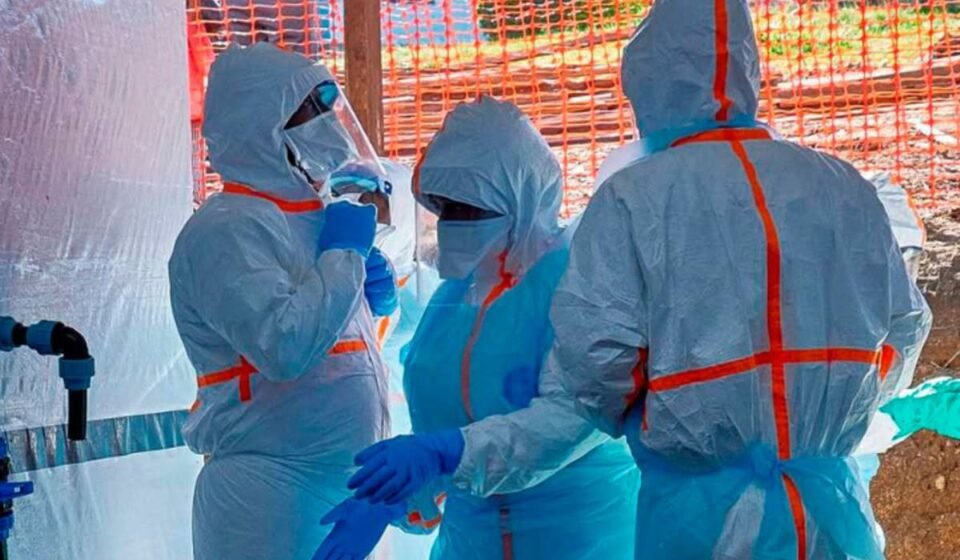
The Ebola Isolation Controversy in Kenya
By Staff Reporter
Seven American aid workers began a 21-day quarantine on July 13, 2026, at a U.S.-backed isolation facility at Laikipia Air Base near Nanyuki, Kenya — the first time the site has actually been used since it became one of the most contested public health projects in the country’s recent history.
Why the Facility Exists
The workers, employed by the humanitarian organization Samaritan’s Purse, had been part of the Ebola outbreak response in the Democratic Republic of Congo. Under a new U.S. policy, American citizens returning from the DRC — where an Ebola outbreak has grown into one of the largest in recent history — must spend three weeks in a third country before entering the United States. None of the seven workers has developed symptoms; the quarantine is a precaution based on possible exposure, not a treatment for illness.
The U.S. State Department has described the facility as a precautionary measure. The U.S. Embassy has separately framed it as part of a broader regional strategy to strengthen Ebola preparedness across East Africa, arguing it helps preserve Kenya’s own healthcare capacity by isolating and monitoring exposed individuals outside hospital settings.
A Facility Built Amid Active Legal Opposition
The project has been in dispute since construction began. In June 2026, Kenya’s High Court ordered a halt to all construction and related activity at the site, following an urgent petition from the Katiba Institute and the Law Society of Kenya challenging the facility’s legality and constitutionality.
Health Cabinet Secretary Aden Duale was later found in contempt of court after work continued despite the order, and he subsequently told the court he had directed an immediate and complete stop to construction and site preparation pending the case’s outcome. Despite that, satellite imagery reviewed by Reuters and statements from U.S. officials indicate the facility has kept operating — a discrepancy that is now central to the ongoing court case.
Public Opposition and Unrest
Opposition to the project has been sustained and, at times, violent. Residents of Nanyuki have held repeated protests against the facility, and reporting indicates the unrest has left at least two people dead, with some reports citing three. Critics — including civil society groups and medical unions — argue that Kenya, a country that has never recorded an Ebola case, is being asked to absorb a health risk that properly belongs to the countries and organizations whose personnel were exposed. Questions have also been raised about the lack of public consultation before the facility was built.
The dispute has become tangled with broader public frustration in Kenya over cost of living and trust in government, meaning the facility has become a flashpoint for grievances well beyond public health policy specifically.
What’s Actually at Stake, Medically
Ebola Virus Disease is a severe illness, and standard containment relies on isolating exposed individuals, tracing contacts, and monitoring for symptoms over the virus’s incubation period — which is what a 21-day quarantine is designed to do. The seven workers currently at Laikipia are asymptomatic, meaning they show no signs of illness; the quarantine exists specifically to catch symptoms early if they appear, not because the workers are known to be infected.
Public health specialists broadly agree that facilities like this are a legitimate part of outbreak containment. What’s specific to this case is that the legitimacy of the process — not the underlying health logic — is what’s being disputed in Kenyan courts and in the streets.
An Unresolved Test of Institutions
With the case still before Kenya’s courts and the facility already in active use, the Laikipia quarantine center has become a test of more than public health policy — it’s now a live question about whether a court order can be enforced against the government, and whether Kenyan authorities can manage an international health obligation without further eroding public trust in the process.
Do you think Kenya’s government should have paused the facility’s use entirely until the court case is resolved, even with aid workers already needing somewhere to quarantine? Or was proceeding the more practical choice?