

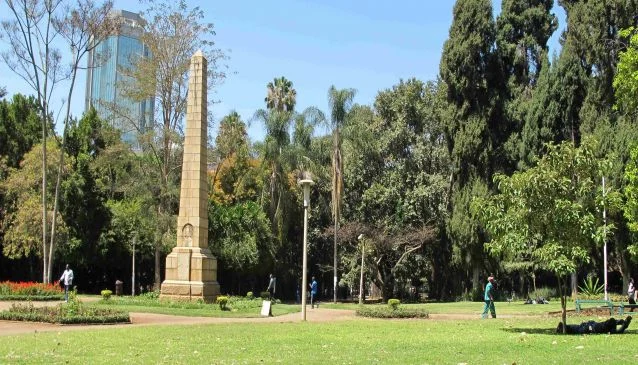
Harare Gardens Under Siege?
By Staff Reporter
Harare Gardens has long been known as the “green lungs” of the capital — a free, open space where office workers eat lunch, students study, couples find a quiet bench, and families escape the noise of the CBD. In recent months, however, growing sections of the park have been fenced off, and neither the Harare City Council nor any other authority has publicly explained why. That silence is fueling real concern among residents about how much of this public space will remain public.
A Park Built for Everyone
For generations, Harare Gardens has functioned as one of the few truly free public spaces in the city center. It costs nothing to enter, it has no fixed closing time, and it has hosted everything from casual picnics to the Harare International Festival of the Arts. That accessibility is precisely why the recent changes have struck a nerve.
The Fencing Phenomenon
Regular visitors describe a clear pattern: areas that used to be open lawn or walking paths are now behind fences. Some fencing is easy to explain — police posts, the restaurant, and the conference facilities have long had defined boundaries. But the newer fencing doesn’t match those categories, and residents are asking a fair question: is this legitimate security or maintenance work, or is public land quietly being handed to private interests?
What’s Being Fenced — and Why It’s Raising Eyebrows
One section that visitors say is now fenced off is being used as a car park serving people who work in or visit the buildings along 99 Park Lane. That’s notable because the area in question includes wetland, which — if accurate — would raise real environmental and land-use questions, since wetlands in and around Harare are supposed to carry development restrictions.
Elsewhere in the gardens, only poles have gone up so far, with no fencing panels yet attached. Some residents read this as an early stage of the same process — a way of marking out territory gradually enough that it doesn’t trigger an immediate public reaction, by the time it’s obvious what’s happened, the structures are already too far along to easily reverse.
It’s worth being clear about what’s confirmed and what isn’t here: these are the observations of park visitors and residents, not a confirmed account from the City Council or the parties involved. No official explanation has been offered either way.
The Council’s Silence
That’s really the core issue. Whatever the explanation turns out to be, the Harare City Council has not made any public statement clarifying what is being built, who is involved, or what the long-term plan for the gardens is. In the absence of that information, speculation fills the gap — which serves no one, including the Council itself, if the true explanation is innocent.
What Residents and Civil Society Can Actually Do
Public frustration is valid, but it’s most effective when it’s channeled into something concrete. A few practical routes residents and civil society groups have used elsewhere in similar cases:
- File a formal request for information with the Harare City Council’s Town Clerk’s office, asking specifically for any lease, permit, or development approval covering the fenced sections.
- Contact ward councillors directly — councillors can raise the issue formally at council meetings and are accountable to ask for answers on residents’ behalf.
- Loop in environmental bodies, such as the Environmental Management Agency (EMA), if wetland encroachment is suspected — EMA has statutory authority over wetland development in Zimbabwe.
- Document and date the changes — photos of fencing progress, with dates, are useful evidence if the matter ever goes to a public inquiry or media investigation.
- Push local media to file their own inquiries with the Council; official “no comment” responses are themselves newsworthy and tend to prompt follow-up.
Why This Matters Beyond One Park
Public parks are not just green space — in a dense city center, they’re one of the only places where access isn’t determined by income. Every quiet privatization of a public asset, even in small pieces, changes who gets to use the city. That’s why residents are right to ask for a clear answer, not because a fence itself is automatically wrong, but because a public authority owes the public an explanation when its shared land starts disappearing behind one.
What do you think local residents or civil society groups should do next to get real answers from the City Council? Share your view below.