

Chickenpox Cases Confirmed in Harare
By Staff Reporter — Harare, Zimbabwe
The City of Harare has confirmed several cases of chickenpox (varicella) within the capital, prompting a public health notice and renewed debate over gaps in the country’s immunization framework.
The Notice
In a public notice issued Friday, July 10, the Harare City Health Department confirmed the ongoing infections and said affected patients are receiving appropriate medical care. The department said it is working alongside the Ministry of Health and Child Care (MoHCC) to strengthen surveillance and monitor the situation. Officials stressed there is no cause for public panic, but said early detection and adherence to basic public health measures — hand hygiene, isolation of suspected cases, and prompt reporting — would be critical to limiting further spread.
A Recurring, Preventable Problem
Chickenpox is not new to Zimbabwe. The country has seen localized spikes before, including a notable outbreak at a boarding school in Chikomba District in 2019, and cases typically tick up seasonally ahead of the warmer months.
What’s drawn more scrutiny this time is a structural gap: the varicella vaccine is not currently part of Zimbabwe’s public Expanded Programme on Immunization (EPI), meaning it isn’t offered free through routine childhood immunization. It remains available privately, and health officials are encouraging eligible children and high-risk adults to get vaccinated where they can access it. Public health advocates argue that without the vaccine in the free public schedule, prevention depends heavily on individual awareness and private healthcare access — leaving the response to outbreaks reactive rather than preventive. Adding varicella to the routine public schedule, as some countries have done, is the kind of shift that would move the strategy from containment toward long-term prevention, though it comes with real cost and logistics trade-offs for a public health budget already stretched across other priorities.
Chickenpox Is Not Mpox
Given how much global attention viral rash illnesses have received in recent years, the chickenpox confirmation has understandably caused some anxiety locally. It’s worth being direct: chickenpox and mpox are unrelated diseases caused by entirely different virus families, and confusing the two can lead to unnecessary alarm or, just as bad, complacency about the wrong disease.
| Feature | Chickenpox (Varicella) | Mpox |
|---|---|---|
| Virus family | Herpesviridae (varicella-zoster virus) | Poxviridae (Orthopoxvirus) |
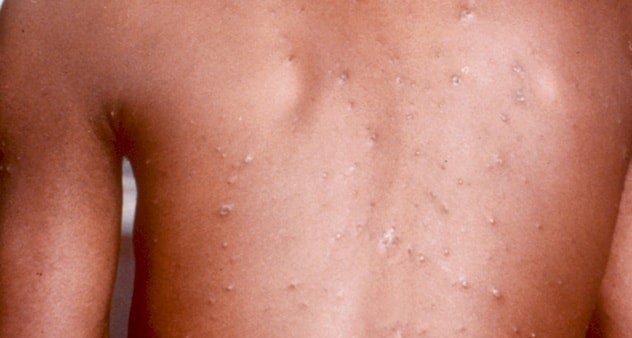
| Rash pattern | Itchy spots evolving into thin-walled, fluid-filled blisters, appearing in waves | Deep-seated, often painful sores that tend to mature at the same stage together |
| Lymph nodes | Rarely significant swelling | Swollen lymph nodes are a hallmark sign, often appearing before the rash |
How It Spreads
Chickenpox is highly contagious. It spreads through respiratory droplets from coughing or sneezing, and through direct contact with fluid from skin blisters. The tricky part for containment is timing: an infected person can spread the virus one to two days before any rash appears, and remains contagious until every blister has dried into a scab — a window that can span a week or more.
Residents are advised to watch for:
- Fever and headache
- Loss of appetite
- Fatigue and general body weakness
- An itchy rash that progresses from red spots to fluid-filled blisters before crusting over
Prevention and What to Do
Health authorities are recommending a combination of measures for households, schools, and individuals:
- Vaccination: Not yet free through the public programme, but available privately — worth discussing with a healthcare provider, particularly for young children and high-risk adults.
- Isolation: Children with suspected or confirmed chickenpox should stay home from school and childcare until all blisters have fully crusted over.
- Hygiene: Regular handwashing with soap and water or alcohol-based sanitizer, and covering coughs and sneezes.
- Surface and ventilation care: Frequent disinfection of commonly touched surfaces; schools in particular are being advised to keep classrooms well-ventilated and watch for learners presenting with fever or rash.
Who’s Most at Risk
Chickenpox is usually mild in healthy children, but infants, pregnant women, adults (who tend to get more severe disease than children), and anyone with a compromised immune system face a higher risk of complications and should seek medical attention promptly if symptoms appear, rather than waiting to see if the illness resolves on its own.
This article is for general informational purposes and is not a substitute for medical advice. Residents with symptoms or concerns should consult a healthcare provider.