

Who Guards the Public Interest When the Minister Owns the Market?
Story By Staff Reporter
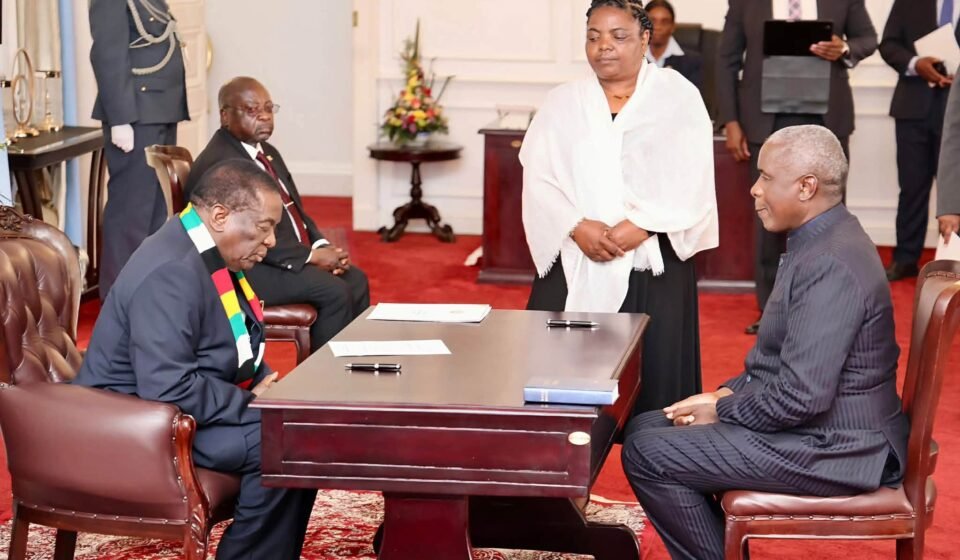
On 8 October 2026, President Emmerson Mnangagwa reshuffled his economic team. He appointed businessman and Senator Kudakwashe Tagwirei as Minister of Economic Development and Investment Promotion. Mnangagwa separated the new ministry from the Ministry of Finance, which stays under Professor Mthuli Ncube.
According to the government, the split will help Treasury focus on public finances. Meanwhile, the new ministry will concentrate on investment and growth. Critics see a bigger problem. They ask whether Zimbabwe is building a better economic system or formalising a link between political power and private wealth.
Why the Tagwirei appointment is controversial
Tagwirei has business interests in energy, agriculture, banking, construction and mining. In these sectors, government contracts, procurement, foreign currency allocations and state-owned enterprises carry heavy commercial weight. His business dealings have also drawn international scrutiny, including United States sanctions.
Days after his swearing-in, Mnangagwa also promoted him to Zanu PF’s Politburo as Secretary for Economic Affairs and Investment Promotion. As a result, his influence now spans both the state and the ruling party.
What is state capture?
State capture goes beyond ordinary corruption. It happens when powerful individuals or private interests gain influence over public institutions. They then use that influence to shape government decisions, public spending, laws or economic policy in their own favour.
It can take several forms:
- Public contracts that go to insiders without genuine competition
- State enterprises that serve connected businesses
- Regulatory decisions that favour particular companies
- Oversight bodies that fail to hold powerful people accountable
The central question is simple. Does the state still act in the public interest, or does it increasingly serve a privileged political and business elite?
The appointment alone does not prove that state capture has occurred. However, critics say it raises serious concerns about conflicts of interest, transparency and the protection of national resources.
Experts sound the alarm
Retired economist Professor Tony Hawkins places the appointment in a wider context. He argues that a separate economic ministry risks consolidating the influence of a powerful business figure within an already compromised political system.
Hawkins also questions why a businessman under US sanctions should lead a key economic ministry. In his view, this raises basic concerns about transparency, accountability and the rule of law. He adds that there has been no meaningful outcry in the media or in Parliament.
“State capture before our very eyes”
Human rights lawyer Doug Coltart goes further. He says Zimbabwe has moved past the point where conditions are merely “ripe” for state capture. In his words, the country is seeing it “before our very eyes.”
Coltart points to businessmen who built their empires on state patronage. He describes “tenderpreneurs” who sometimes won tenders without even bidding. In some cases, he says, a different company with real capacity ended up doing the work. He cites the Dema power project as an example of the procurement concerns he has examined.
Coltart also raises concerns about constitutional change. Under the new arrangement, he argues, a simple majority of MPs could secure a presidency, rather than millions of citizens. During the debate on Constitutional Amendment No. 3, he alleges, businessman Wicknell Chivayo openly rewarded some MPs with vehicles.
Coltart says such conduct breaches parliamentary rules and amounts to a criminal offence. According to him, a complaint is pending before Parliament, but Parliament has not acted on it. He adds that the Zimbabwe Anti-Corruption Commission received details of an investigative journalism report on Tagwirei’s business dealings and took no action.
These are serious allegations. Investigators would need contracts, tender records and audit findings to check whether officials followed procurement rules. Likewise, Parliament and the anti-corruption bodies have a duty to investigate and to act where they find wrongdoing.
From corruption to kleptocracy
Coltart warns that Zimbabwe is “slipping rapidly” into kleptocracy. A kleptocracy differs from a state where corruption simply exists. In a kleptocracy, those in power systematically use public institutions for private enrichment, and corruption becomes their core objective.
Therefore, the real test is institutional. Can the bodies that exist to prevent corruption investigate allegations and enforce accountability, even when politically influential people are involved? Coltart argues that the last line of defence is the people of Zimbabwe. After all, the Constitution says all power derives from them.
A conflict of interest at the heart of government
UK-based economist Chenaimoyo Mutambasere focuses on the clash between Tagwirei’s private interests and his public duties. She argues that a major private sector player cannot credibly serve as the bridge between Zimbabwe and its investors.
The practical questions are hard to avoid. Decisions on energy pricing, subsidies, investment incentives and state enterprises create winners and losers. If a minister holds interests in those sectors, how will he manage conflicts? Will he disclose his business interests? Will he step aside from decisions that affect them? Can independent institutions verify that he follows the safeguards?
Mutambasere puts it bluntly. A minister cannot sit on both sides of the table. She asks how such a minister can “police his own homework.”
The sanctions problem
Sanctions add a second layer of difficulty. Mutambasere says the designation points to character, because other governments have linked Tagwirei to fraud, money laundering and corruption. She also argues that the minister cannot sign investment deals. Any investor associated with him could face sanctions risk.
The exact restrictions depend on the sanctions regime and the parties involved. Even so, foreign investors and banks may face extra compliance risks. As a result, the appointment could complicate Zimbabwe’s efforts to re-engage the global economy. The government must therefore show that the new ministry will be transparent and that investment decisions will serve the national interest.
Who protects the public interest?
Zimbabwe has oversight institutions, including Parliament, the Auditor General and the Zimbabwe Anti-Corruption Commission. The Mutapa Investment Fund and state-owned enterprises also raise questions about how officials manage public assets.
Yet having these bodies is not enough. They need independence, access to information, investigative capacity and the will to act on their findings.
What needs to change
The experts’ concerns point to five priorities:
- The government should explain why a separate ministry is needed, including its cost, responsibilities and measurable targets.
- Ministers’ financial interests must face transparent and enforceable safeguards.
- Public procurement must be competitive and open, with clear records of who wins contracts and who delivers the work.
- Parliament and independent bodies must investigate powerful people without political interference.
- State-owned enterprises and public investment funds must prove that they deliver value for money.
The question Zimbabwe must answer
Business expertise has a legitimate place in government. However, commercial experience cannot replace transparency, accountability or protection against conflicts of interest. An appointment alone does not prove state capture. The real test is whether institutions can keep public power impartial, protect public assets and keep opportunities open to all businesses on fair terms.
In the end, the stakes go well beyond one minister. They include the integrity of the state, the credibility of Zimbabwe’s investment climate and public trust that national resources serve all citizens. The question for government, Parliament and the public is this: is Zimbabwe strengthening the institutions it needs for development, or letting the line between political power and private wealth blur?